
Everything you need to know about AC making strange noises
What Your AC Is Trying to Tell You When It Makes Strange Noises
If you've ever wondered about ac making strange noises what they mean, here's a quick answer before we dive deeper:
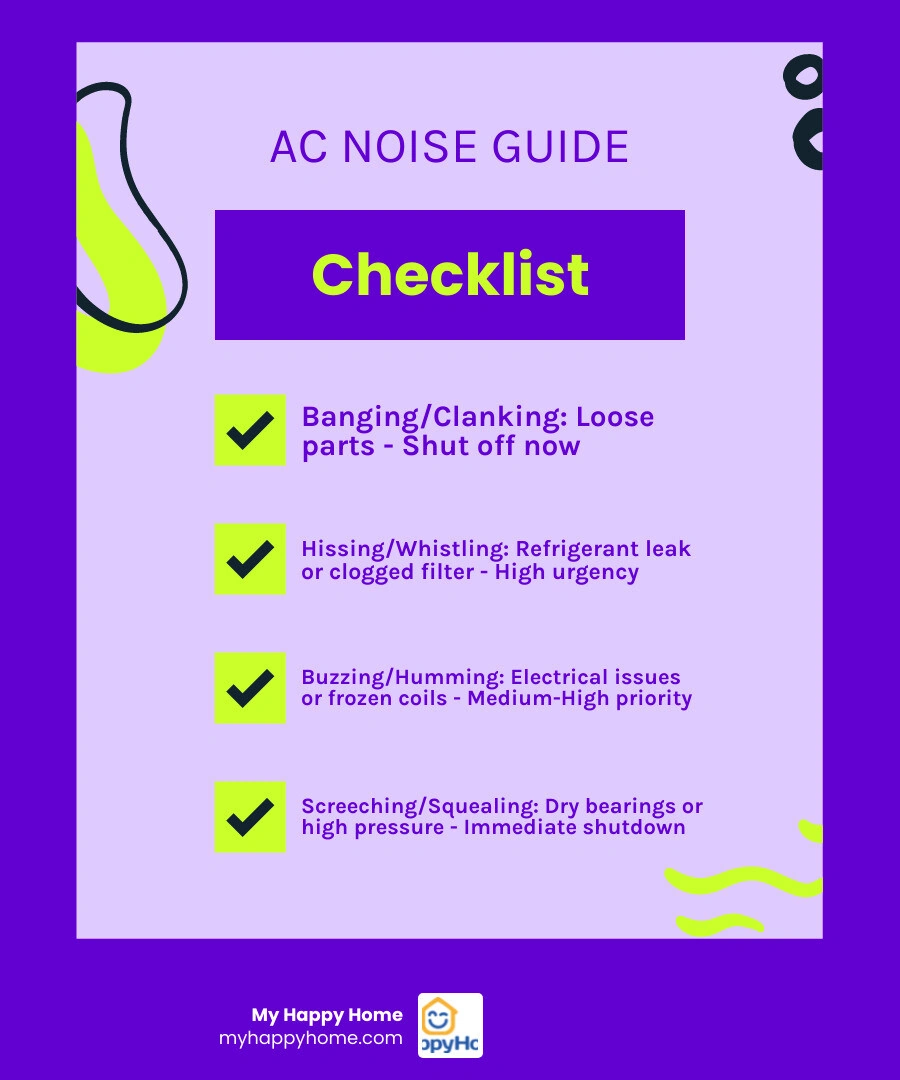
- Noise: Banging / Clanking; Most Likely Cause: Loose or broken internal parts; Urgency: High — shut off immediately
- Noise: Hissing / Whistling; Most Likely Cause: Refrigerant leak or clogged filter; Urgency: High — call a pro
- Noise: Buzzing / Humming; Most Likely Cause: Electrical issue or frozen coils; Urgency: Medium-High
- Noise: Screeching / Squealing; Most Likely Cause: Dry motor bearings or high compressor pressure; Urgency: High — shut off immediately
- Noise: Clicking (repeated); Most Likely Cause: Faulty capacitor, contactor, or thermostat; Urgency: Medium — schedule service soon
- Noise: Rattling; Most Likely Cause: Loose panels, debris, or fan blade; Urgency: Low-Medium — inspect promptly
- Noise: Gurgling / Bubbling; Most Likely Cause: Clogged condensate drain or refrigerant issue; Urgency: Medium — schedule service
- Noise: Grinding; Most Likely Cause: Worn motor bearings; Urgency: High — stop using the system
Your air conditioner is engineered to run quietly — modern high-efficiency units can operate at as low as 19 decibels, which is softer than a whisper. So when your system suddenly starts banging, hissing, or screeching on a hot June afternoon, it's not being dramatic. It's communicating. Something inside has changed, and that sound is the earliest warning you're going to get.
Most AC noises trace back to one of a handful of root causes: loose or broken parts, worn motor components, electrical faults, refrigerant issues, or restricted airflow from a dirty filter. Some of these are minor and easy to address. Others — like a screaming compressor or a persistent hiss near the refrigerant lines — mean you should shut the system down right now and call a professional. Knowing the difference can save you from turning a small repair into a full system replacement.
I'm Matthew Palmieri, founder of My Happy Home, and my background spans hands-on HVAC service, contractor operations, and building proactive home maintenance systems — which means I've seen how often a strange AC noise that gets ignored for a week turns into a mid-summer breakdown. In this guide, I'll walk you through everything you need to know about ac making strange noises what they mean, so you can act fast and protect your home.
Deciphering the Symphony: AC Making Strange Noises What They Mean

When we step inside a quiet home, we expect the steady, comforting whoosh of cool air. But when an unexpected sound disrupts that peace, it can be incredibly stressful. Think of your air conditioner as a highly coordinated machine. It relies on a compressor, a condenser fan motor, an indoor blower motor, and complex electrical circuits to keep you cool. When one of these components begins to fail, the change in its performance is almost always accompanied by a new sound.
Recognizing these changes is the first step in protecting your system. If you ignore these auditory warnings, a minor issue can quickly spiral into a catastrophic failure. For example, a small loose part that rattles can eventually break free and fly directly into a major component, turning a simple repair into a complete system replacement.
To help you understand exactly what your cooling system is trying to say, let's break down the most common sounds, look at what they mean, and explore the Signs Your AC Needs Repair.
Banging and Clanking Sounds
If you hear a loud banging or a heavy metal-on-metal clanking sound coming from your air conditioner, you must act quickly. This is not a sound you can afford to "wait and see" about.
A banging noise almost always indicates that a major internal component has come loose, broken, or detached entirely. Inside your outdoor condenser unit, the compressor is the heart of the system. It contains pistons, connecting rods, and crankshafts. If these internal parts fail or break, they will thrash around inside the sealed compressor shell, creating a violent banging sound.
Alternatively, a clanking sound can happen if the outdoor fan blades become bent or loose, causing them to strike the protective metal cage surrounding the unit. If you hear these harsh metallic noises, turn your system off immediately at the thermostat. Running the system in this state can cause irreversible compressor damage or shred the fan assembly, leading to a much larger repair bill.
Hissing and Whistling: AC Making Strange Noises What They Mean for Airflow
Hissing and whistling are closely related, but they usually point to two very different issues: refrigerant problems or restricted airflow.
- Refrigerant Leaks (Hissing): A persistent, high-pressure hissing or bubbling sound along the copper refrigerant lines or near the indoor evaporator coil is a classic sign of a refrigerant leak. Your air conditioner operates as a closed loop; refrigerant should never escape. When a leak develops, the gas escapes under high pressure, producing a distinct hiss. Because handling refrigerant requires specialized tools and EPA certification, you must call a professional immediately to locate and seal the leak.
- Airflow Restrictions (Whistling): If you hear a high-pitched whistling or screaming sound coming from your return vents, your system is likely starving for air. When airflow is severely restricted, the blower motor is forced to pull air through tiny gaps at high velocity, creating a flute-like whistling sound. The primary culprit behind this is a severely clogged air filter. Understanding How Dirty Air Filters Destroy Your AC Performance is crucial, as restricted airflow can cause high static pressure, strain your blower motor, and even freeze your system's coils.
Buzzing and Humming Sounds
A gentle, steady hum from your outdoor unit is completely normal—it is the sound of the compressor and fan motor doing their jobs. However, if that hum turns into a loud, vibrating buzz, your system is experiencing an issue.
Buzzing is frequently an electrical warning sign. It can point to a failing contactor (the switch that tells your outdoor unit to turn on) or a weak capacitor that is struggling to hold and release the electrical charge needed to start the motors. If a capacitor fails, the outdoor fan motor may hum loudly but refuse to spin.
Another common cause of buzzing from the indoor air handler is a frozen evaporator coil. When airflow is blocked by a dirty filter or closed vents, the temperature of the indoor coil drops below freezing, causing condensation to turn into a thick sheet of ice. This ice blocks airflow completely, causing the blower motor to strain and vibrate, producing a loud buzz. If your system is buzzing and refusing to cool, check out our guide on Why Is My AC Blowing Warm Air? Troubleshooting Steps to help narrow down the cause.
Screeching and Squealing: AC Making Strange Noises What They Mean for Your Motor
A high-pitched screeching or squealing sound can make you want to cover your ears, and your AC feels the same way. This sound typically originates from the motor assembly.
In older air conditioning systems, squealing is often caused by a worn-out or slipping fan belt that connects the blower motor to the fan. If the belt stretches or slips out of its pulley track, it will screech loudly.
In modern systems, which generally use direct-drive motors without belts, a screeching sound points directly to dry or failing motor bearings. Over time, the factory lubrication inside the blower motor or condenser fan motor bearings dries out, creating intense metal-on-metal friction.
Additionally, if you hear a high-pitched screaming sound coming from your outdoor compressor that lasts for 10 to 15 seconds at startup, it can indicate dangerously high internal pressure. This is a critical safety issue. Modern systems often have safety switches to shut down under extreme pressure, but you should never rely solely on those. Turn the system off immediately to prevent catastrophic compressor failure.
Indoor vs. Outdoor Unit Noises: Identifying the Source
To get an accurate diagnosis, you first need to pinpoint where the noise is coming from. Your air conditioning system is split into two main sections: the indoor unit (the air handler or furnace) and the outdoor unit (the condenser).
When a noise occurs indoors, it is typically related to the blower motor, the evaporator coil, the air filter, or the ductwork. For example, a gurgling or bubbling sound near your indoor air handler usually points to a clogged condensate drain line. In humid environments like O'Fallon, Missouri, your AC pulls gallons of water out of the air every day. If algae or debris blocks the drain line, water will back up, creating a bubbling sound as air bubbles struggle to pass through the trapped water.
Outdoor noises, on the other hand, are usually tied to the compressor, the condenser fan, or the electrical components housed in the outdoor cabinet. A rattling sound outside could be as simple as a loose service panel vibrating against the metal frame, or it could be debris like twigs and leaves that have fallen through the top grate and are being struck by the spinning fan blades.
If your outdoor unit is completely silent—or making a faint humming sound but the fan isn't spinning—your system won't be able to cool your home. If you find yourself in this situation, read our troubleshooting guide on AC Not Turning On: What to Check First to help identify the problem before calling for service.
How Regular Maintenance Prevents Loud AC Noises
The absolute best way to handle a noisy air conditioner is to prevent the noise from developing in the first place. Almost every problematic sound we've discussed—from the squeal of dry bearings to the buzz of a failing electrical contactor—can be prevented with regular, proactive maintenance.
During a professional tune-up, a technician will inspect your system from top to bottom. They will lubricate dry motor bearings, check electrical connections for tightness, test the capacitance of your capacitors, clean the outdoor condenser coils, and ensure your refrigerant levels are correct. This proactive care catches minor wear-and-tear issues before they have a chance to turn into loud, expensive breakdowns.
If you are wondering how to keep your system running quietly year after year, it helps to understand the schedule and benefits of regular care. Check out our resources on How Often Should You Schedule an AC Tune-Up to plan your seasonal visits. You can also learn How a Tune-Up Improves Efficiency and Lowers Bills and discover How Regular Maintenance Prevents Costly Home Repairs to see how much you can save over the lifespan of your system.
Frequently Asked Questions About AC Noises
Navigating unexpected air conditioner noises can bring up a lot of questions. Here are some of the most common questions homeowners ask when trying to diagnose their systems.
Is it safe to run my AC if it is making a loud banging noise?
No, it is not safe. If your air conditioner is making a loud banging or clanking sound, you should turn the system off immediately at the thermostat or the main circuit breaker. Banging indicates that an internal component has broken or come loose. Continuing to run the system can cause cascading mechanical damage, potentially destroying the compressor or fan motor entirely.
Before you call for professional assistance, you can perform a few safe, basic checks. Read our list of AC Troubleshooting Tips Before Calling a Pro to see what you can safely inspect on your own.
Why does my air conditioner click repeatedly when it tries to turn on?
A single click when your air conditioner starts up or shuts down is completely normal—that is simply the sound of your thermostat relay or the outdoor electrical contactor closing to send power to the system.
However, if your system clicks repeatedly and rapidly without the outdoor unit starting up, it indicates an electrical communication failure. This is often caused by a weak or failed capacitor that cannot provide the startup charge, a faulty contactor with pitted electrical contacts, or a failing thermostat relay. Because this involves high-voltage electrical components, it is best to have a professional diagnose and resolve the issue.
Can a dirty air filter really cause my AC to make whistling sounds?
Yes, absolutely. A dirty air filter is the leading cause of whistling and howling sounds in home HVAC systems. When dust and debris clog your air filter, it restricts the volume of air that can pass through. The blower motor continues to pull with the same force, creating high static pressure. This forces the air to squeeze through tiny gaps around the filter frame or duct joints at high speeds, creating a whistling sound.
Replacing your filter every 1 to 3 months is the simplest way to keep your system quiet and efficient. If you want to know what to expect during a professional system check, take a look at our comprehensive AC Tune-Up Guide: What to Expect.
Conclusion
When your air conditioner starts making strange noises, it is your system's way of asking for attention. Whether it is a minor issue like a dirty filter causing a whistle or a serious mechanical problem like a banging compressor, addressing the sound early is the key to preventing a complete system breakdown.
At My Happy Home, we believe homeownership shouldn't be stressful or filled with unexpected, budget-breaking repair bills. That is why we offer an all-in-one home service membership. With our comprehensive plans, your HVAC, plumbing, electrical, and major home appliances are covered under one predictable, affordable monthly subscription. You get 24/7 customer support, proactive maintenance, and access to licensed, vetted professionals who are ready to restore the peace and quiet to your home.
If your air conditioner is making a sound that doesn't belong, don't wait for it to stop cooling on a hot summer day. Explore our professional AC Repair Service and learn how a My Happy Home membership can give you year-round peace of mind.