
How humidity affects your comfort at home
Why Your Thermostat Isn't the Whole Story When It Comes to Home Comfort
How humidity affects your comfort even when the temperature is right is one of the most common — and most overlooked — reasons a home can feel stuffy, sticky, or just "off," no matter what the thermostat reads.
Here's the short answer:
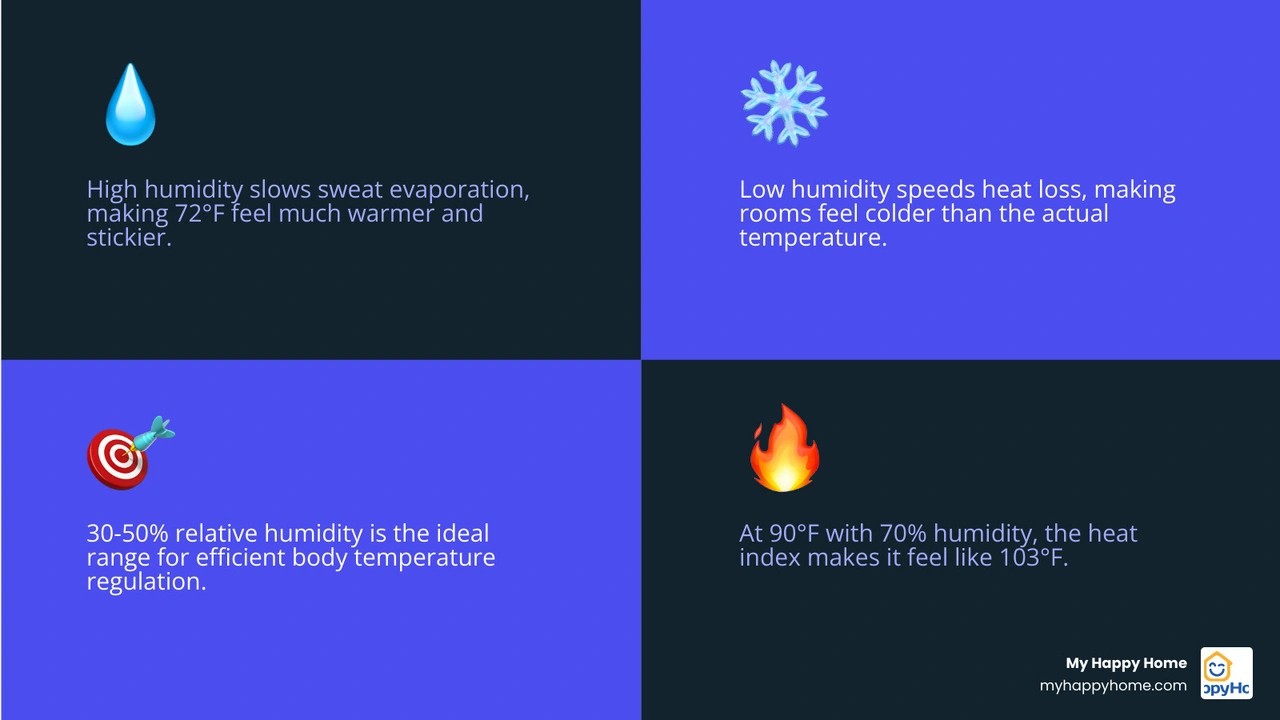
- High humidity (above 50-60%) slows down sweat evaporation, making you feel warmer and stickier than the actual temperature suggests.
- Low humidity (below 30%) pulls moisture from your skin and speeds up heat loss, making rooms feel colder than they are.
- The sweet spot for indoor relative humidity is 30-50% — the range where your body can regulate temperature efficiently and your home stays healthy.
- The heat index — not the thermometer — reflects what a temperature actually feels like. At 90°F with 70% humidity, it can feel like 103°F.
- Your HVAC system removes some moisture as it cools, but it may not be enough on its own — especially in humid climates or if your system is oversized.
You've probably experienced this firsthand: it's 72°F inside, the AC is running, and you still feel uncomfortable. That disconnect between the number on the thermostat and how your body actually feels isn't a mystery — it's physics. And understanding it is the first step to fixing it.
I'm Matthew Palmieri, founder of My Happy Home, and with a background spanning HVAC systems, smart home technology, and hands-on field service, I've spent my career helping homeowners understand exactly how humidity affects your comfort even when the temperature is right — and what to do about it. In the sections ahead, I'll walk you through the science, the warning signs, and the practical solutions that actually work.
The Science of Sweat: How Humidity Affects Your Comfort Even When the Temperature Is Right
To understand why moisture levels dictate your comfort, we have to look at the human body's built-in cooling mechanism. Our bodies maintain a core temperature of about 98.6°F. When we generate excess heat—whether from moving around, cooking, or simply sitting in a warm room—our brain signals our sweat glands to produce moisture.
This is where the magic of evaporative cooling comes into play. Sweat itself doesn't cool you down; it is the evaporation of that sweat into the surrounding air that does. As liquid water on your skin transitions into water vapor, it absorbs heat from your body. In fact, sweat evaporation absorbs roughly 580 calories of heat per gram of water. This process relies heavily on a physics concept called the vapor pressure gradient—the difference between the moisture level on your skin and the moisture level in the surrounding air.

When indoor moisture levels are low, the air acts like a dry sponge, eagerly drinking up the moisture from your skin. Sweat evaporates rapidly, heat dissipation happens effortlessly, and your core temperature remains stable.
However, when relative humidity rises, the air is already saturated with water vapor. The "sponge" is full. Because the vapor pressure gradient is narrow, sweat cannot evaporate efficiently. Instead of evaporating and cooling you down, sweat simply sits on your skin, leaving you feeling sticky, clammy, and uncomfortably warm.
When your body cannot shed heat through evaporation, your heart rate can increase by 10 to 20 beats per minute as your cardiovascular system works harder to pump blood to your skin in a desperate attempt to cool down. To learn more about how your home's cooling system handles this latent heat load, check out our guide on How Your AC Handles Humidity in Your Home.
The Heat Index vs. The Thermostat: Why the Numbers Don't Tell the Whole Story
Your thermostat measures dry-bulb temperature—the temperature of the air as registered by a standard thermometer. While dry-bulb temperature is a crucial metric, it completely ignores the moisture content of the air. This is why the National Weather Service relies on the heat index (often called the "apparent temperature") to describe how hot the air actually feels to the human body.
The heat index combines air temperature and relative humidity to paint a realistic picture of human thermal perception. When humidity is high, the apparent temperature climbs dramatically higher than the dry-bulb temperature.
- Air Temperature (°F): 80°F; 30% Relative Humidity: 78°F (Feels Cooler); 50% Relative Humidity: 81°F; 70% Relative Humidity: 85°F; 90% Relative Humidity: 91°F
- Air Temperature (°F): 85°F; 30% Relative Humidity: 83°F (Feels Cooler); 50% Relative Humidity: 88°F; 70% Relative Humidity: 95°F; 90% Relative Humidity: 108°F
- Air Temperature (°F): 90°F; 30% Relative Humidity: 87°F (Feels Cooler); 50% Relative Humidity: 95°F; 70% Relative Humidity: 103°F; 90% Relative Humidity: 122°F
- Air Temperature (°F): 95°F; 30% Relative Humidity: 93°F (Feels Cooler); 50% Relative Humidity: 105°F; 70% Relative Humidity: 114°F; 90% Relative Humidity: 133°F+
As the table shows, at 90°F and 70% humidity, the heat index makes it feel like 103°F—a massive 13-degree difference caused entirely by humidity preventing sweat evaporation. At extreme levels, such as 95°F with 90% humidity, the heat index can exceed 133°F, placing people in extreme physical danger of heat stroke and heat exhaustion.
This same principle explains how humidity affects your comfort even when the temperature is right indoors. If your thermostat is set to 72°F but your indoor relative humidity is 65%, the air will feel heavy, sticky, and significantly warmer than 72°F.
Why Does How Humidity Affects Your Comfort Even When the Temperature Is Right Depend on the Dew Point?
While relative humidity is the most common term used in weather forecasts, HVAC professionals and meteorologists often prefer to look at the dew point. The dew point is the temperature to which air must be cooled to become fully saturated with water vapor (reaching 100% relative humidity).
Unlike relative humidity, which changes constantly as the temperature goes up and down throughout the day, the dew point is an absolute measure of the actual amount of water vapor in the air.
- Dew point of 55°F or below: The air feels dry, crisp, and highly comfortable.
- Dew point between 56°F and 64°F: The air begins to feel slightly sticky or muggy, particularly in the evening.
- Dew point of 65°F or higher: The air feels heavy, oppressive, and thoroughly muggy.
When the indoor dew point rises, the atmospheric pressure of the water vapor in your home makes it incredibly difficult for your body to shed heat. Monitoring the dew point gives you a much more consistent understanding of why your home might feel stuffy even when the thermostat says the temperature is perfect.
How Humidity Affects Your Comfort Even When the Temperature Is Right During Seasonal Shifts
Here in O'Fallon, MO, we experience the full spectrum of seasonal transitions. Our summers are notoriously hot and muggy, while our winters are freezing and dry. These dramatic shifts highlight how indoor climate and thermal perception change throughout the year.
During our humid Missouri summers, outdoor moisture constantly tries to infiltrate your home. If your indoor climate isn't properly managed, summer mugginess turns your living room into a swampy environment where 74°F feels like 80°F.
Conversely, when winter arrives, the freezing outdoor air holds very little moisture. When that cold air leaks into your home and is heated by your furnace, its relative humidity plummets—often dropping below 15%. This extreme winter dryness causes rapid moisture evaporation from your skin, speeding up heat loss and making a cozy 70°F room feel like a chilly 64°F.
Finding the Sweet Spot: Ideal Indoor Humidity Levels
To maintain an indoor environment that protects your comfort, your health, and your property, you need to find the ideal humidity "sweet spot."
According to ASHRAE (American Society of Heating, Refrigerating and Air-Conditioning Engineers) standards and EPA recommendations, the ideal indoor relative humidity range is 30% to 50%. Within this comfort zone, the air is dry enough to allow efficient body cooling and prevent biological growth, yet humid enough to prevent dry skin and respiratory irritation.
The Dangers of High Indoor Humidity (Above 50-60%)
When relative humidity regularly climbs above 50% to 60%, your home becomes a breeding ground for various indoor air quality issues and structural problems:
- Mold and Mildew Growth: Mold spores thrive on organic materials like drywall, carpet, and wood when surface relative humidity exceeds 70%. High indoor humidity makes it easy for these surfaces to reach that threshold.
- Dust Mites and Allergens: Dust mites, the leading cause of indoor allergies and asthma triggers, reproduce rapidly in environments with humidity above 50%.
- Sleep Disruption: High humidity is linked to increased nighttime awakenings, less deep sleep, and poorer overall sleep quality because your body cannot cool itself down to its natural sleeping temperature.
- Musty Odors: That classic "basement smell" is the direct result of microbial volatile organic compounds released by mold and bacteria growing in damp air.
- Structural Damage: Over time, excess moisture can warp hardwood floors, cause drywall paint to peel, and rot wooden structural framing.
To understand how your cooling system is supposed to naturally keep these issues at bay, take a look at our article on How Your Air Conditioner Works Explained Simply.
The Consequences of Low Indoor Humidity (Below 30%)
On the other end of the spectrum, letting your home's humidity drop below 30% creates its own set of frustrating issues:
- Dry Skin and Irritated Sinuses: Low humidity pulls moisture directly from your body, leading to chapped lips, itchy skin, dry eyes, and irritated nasal passages (which can increase your susceptibility to winter colds and flus).
- Static Electricity: Dry air is an excellent electrical insulator, allowing static charges to build up on surfaces, resulting in frequent, annoying static shocks.
- Respiratory Irritation: Dry air can aggravate asthma, bronchitis, and allergies by drying out the protective mucous membranes in your respiratory tract.
- Wood Cracking and Gapping: Wooden furniture, musical instruments, and hardwood flooring will shrink as they lose moisture, leading to unsightly gaps, squeaking floors, and structural cracks.
- Increased Heat Loss: Because dry air accelerates sweat evaporation, you will feel colder at normal temperatures, tempting you to turn up the thermostat and increase your energy bills.
How Your HVAC System Manages Moisture (And Why It Might Struggle)
Most homeowners don't realize that their air conditioner is actually a powerful dehumidifier. As your AC pulls warm, humid air from your home and passes it over the freezing evaporator coil, the moisture in the air condenses onto the cold metal—much like water droplets forming on a cold glass of iced tea on a hot summer day. This condensation drains out through a condensate line, successfully removing gallons of water from your indoor air every day.
However, standard air conditioners are designed primarily to control temperature, not humidity. There are several reasons why your system might struggle to keep humidity in check:
- Oversized AC Systems: If an HVAC system is too large for your home, it will cool the house down incredibly fast and then shut off. This is known as short cycling. Because the system only runs for a few minutes at a time, it never runs long enough for the evaporator coil to get cold enough and stay cold enough to remove meaningful amounts of water vapor. You end up with a home that is cold but incredibly clammy.
- Restricted Airflow: Dirty air filters, blocked return vents, or failing blower motors reduce the volume of air passing over the coil, severely limiting the system's ability to pull moisture out of the air.
- High Outdoor Moisture Loads: During peak summer months in O'Fallon, the sheer volume of humidity infiltrating through drafts, doors, and windows can simply overwhelm a standard AC system.
Regular maintenance is the best way to ensure your system is running long enough and efficiently enough to manage moisture. Learn more by reading How a Tune-Up Improves Efficiency and Lowers Bills.
Signs Your Home Has a Humidity Imbalance
It is easy to ignore humidity until it starts causing noticeable issues. Watch out for these common warning signs that your indoor moisture levels are out of balance:
- Condensation on Windows: Water droplets or fog pooling on the interior glass of your windows is a clear sign that indoor humidity is too high.
- Clammy or Sticky Skin: If you feel like you need a shower just from sitting on your couch in an air-conditioned room, your humidity is likely well above 50%.
- Frequent Static Shocks: If touching metal doorknobs or hugging family members results in a painful spark, your air is far too dry.
- Peeling Paint or Wallpaper: High humidity weakens adhesives, causing wallpaper to bubble and paint to flake or peel away from walls.
- Musty Smells: A persistent damp, earthy odor in closets, basements, or crawl spaces indicates mold or mildew growth.
- Squeaking or Gapping Wood Floors: Gaps opening up between floorboards in the winter or cupping/buckling boards in the summer point to seasonal humidity extremes.
Whole-Home Solutions for Perfect Humidity Control
If your home suffers from persistent humidity issues, relying solely on a standard thermostat and AC unit might not cut it. Fortunately, there are highly effective whole-home solutions that integrate directly with your existing HVAC system to provide year-round comfort:
- Whole-Home Dehumidifiers: These systems install directly into your ductwork. They monitor your home's humidity levels and pull moisture out of the air independently of your air conditioner. This means they can dehumidify your home on a mild, muggy spring day without overcooling your house.
- Bypass or Power Humidifiers: Perfect for dry Missouri winters, these systems inject a controlled amount of water vapor directly into your heated supply air, keeping your skin comfortable and protecting your wood floors from cracking.
- Smart Thermostats with Humidity Control: Modern smart thermostats can monitor both temperature and relative humidity, adjusting your AC's blower speed to maximize moisture removal when needed.
- Variable-Speed Blowers: Upgrading to an HVAC system with a variable-speed blower allows the system to run at a lower, continuous speed, maximizing the amount of time air spends in contact with the cold evaporator coil for superior dehumidification.
To ensure your system is ready to keep you comfortable through the changing seasons, check out our AC Tune-Up Guide: What to Expect and find out How Often Should You Schedule an AC Tune-Up.
Frequently Asked Questions About Indoor Humidity
Why does my house feel sticky even when the AC is running?
This is typically caused by an oversized air conditioner that is short cycling. Because the system cools the air too quickly, it shuts off before it has run long enough to condense and drain away the humidity. Other culprits include high outdoor humidity leaking into the home, dirty evaporator coils, or restricted airflow from a clogged air filter.
What is the ideal indoor humidity level for sleep?
For optimal sleep quality, the ideal relative humidity level is between 30% and 50%, paired with a bedroom temperature between 60°F and 67°F. High humidity (above 60%) prevents your body from naturally lowering its core temperature, leading to more nighttime awakenings, less deep sleep, and a restless night.
Can a dehumidifier help lower my energy bills?
Yes! Because dry air allows sweat to evaporate more efficiently, a lower humidity level makes the air feel cooler than it actually is. Dropping your indoor relative humidity from 70% to 45% can make an 82°F room feel like a comfortable 76°F. This allows you to set your thermostat higher in the summer, reducing your air conditioner's workload and lowering your monthly energy bills.
Conclusion
At My Happy Home, we believe that true home comfort is about more than just hitting a number on a thermostat. It's about creating a balanced, healthy indoor environment where you can breathe easy, sleep soundly, and protect your home from mold, dry rot, and structural damage.
If you are struggling with a home that feels sticky in the summer, drafty and dry in the winter, or just plain uncomfortable, we are here to help. Our comprehensive home protection plans provide O'Fallon homeowners with total peace of mind, offering affordable, subscription-based coverage for your HVAC, plumbing, electrical, and appliance systems under one simple monthly plan.
Don't let improper moisture levels compromise your comfort. Schedule a professional HVAC assessment with one of our licensed, vetted technicians today, or sign up for our Deluxe Maintenance Plan to ensure your system is perfectly tuned to handle whatever weather Missouri throws our way. Book your AC Maintenance Tune-Up today and take the first step toward a happier, healthier home!