
The first steps to take when your AC refuses to turn on
When Your AC Won't Turn On: What to Check Before You Panic
If you're dealing with ac not turning on what to check first, here's a quick answer:
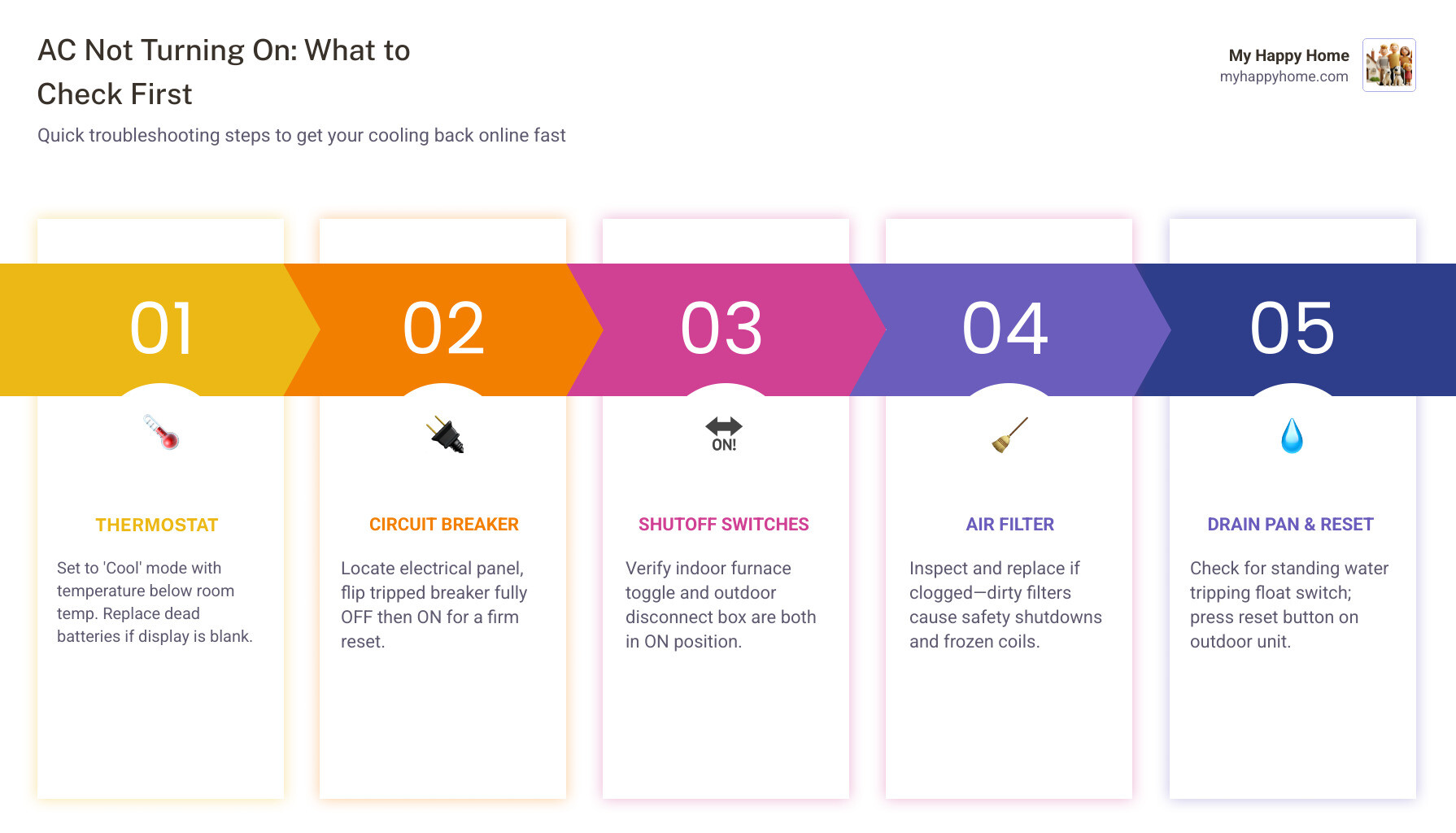
- Check the thermostat — Make sure it's set to COOL and the temperature is set lower than the current room temperature. Replace batteries if the display is blank.
- Check the circuit breaker — Find your electrical panel and look for a tripped breaker. Flip it fully OFF, then back ON to reset.
- Check the indoor and outdoor shutoff switches — Both should be in the ON position. These are easy to accidentally knock off.
- Inspect the air filter — A severely clogged filter can trigger a safety shutdown. Replace it if it looks dirty.
- Look for a safety shutoff — Check the drain pan near your indoor unit for standing water, which can trip a float switch and shut everything down.
- Press the reset button — Many outdoor units have a small reset button. Give it a press and wait a few minutes.
If none of those fix it, a component like a capacitor, contactor, or motor may have failed — and that calls for a professional.
Coming home to a hot, stuffy house is one of those stressful moments that can throw off your whole evening. You hit the thermostat, wait for the familiar hum — and nothing happens. It's frustrating, especially when you have kids, dinner to make, and a hundred other things on your mind.
The good news is that most AC no-start problems come down to a small handful of causes. Many of them are surprisingly simple to check yourself in just a few minutes. In field service experience, basic checks like thermostat settings, circuit breakers, and air filters resolve many common no-start situations without any professional help needed.
This guide walks you through each check in plain language — starting with the easiest and safest steps first — so you can figure out what's going on and get your home comfortable again as quickly as possible.
AC Not Turning On: What to Check First for Quick Troubleshooting
When the heat is rising in your O'Fallon home, your first instinct might be to call for emergency repairs. But before you pick up the phone, we recommend taking a deep breath and performing a quick walkthrough of your system. The goal of troubleshooting ac not turning on what to check first is to eliminate "user error" or simple power disconnects that don't actually require a technician.
Start by verifying your thermostat settings. It sounds silly, but we’ve all had those moments where a family member accidentally switched the system to "Heat" or "Fan Only" while trying to adjust the temperature. Ensure the mode is set to "Cool" and the fan is set to "Auto." If the fan is set to "On," it will blow air continuously even if the cooling system isn't actually running, which can be confusing.
Next, look at the temperature setpoint. For the cooling to kick in, the set temperature needs to be at least 3 to 5 degrees lower than the current room temperature. If it's 75 degrees in the house and your thermostat is set to 74, the system might not trigger immediately. Drop it down to 70 just to see if the unit responds. If you’ve gone through these steps and still hear silence, you may need an AC Repair Service to dig deeper into the control board or wiring.

Thermostat Calibration: AC Not Turning On What to Check First
The thermostat is the "brain" of your HVAC system. If the brain isn't getting power, the rest of the body won't move. One of the most common reasons for a total system failure is actually just dead batteries.
If your thermostat display is blank, dim, or showing a "low battery" icon, replace the batteries immediately. Even if the display seems fine, weak batteries can sometimes fail to send a strong enough signal to the outdoor unit. If you have a smart thermostat that doesn't use batteries (it relies on a "C-wire" for power), a blank screen usually points to a larger power issue with the furnace or air handler itself.
Check for loose wiring by gently popping the thermostat off its wall plate. If a wire has wiggled loose from its terminal—specifically the "Y" wire which controls cooling—the system won't start. If everything looks secure but the unit is still unresponsive, the thermostat itself might have reached the end of its lifespan.
Verifying Indoor and Outdoor Shutoff Switches
Did you know your AC has "secret" power switches? Building codes in Missouri require shutoff switches near both the indoor and outdoor components of your system.
- The Indoor Switch: This often looks exactly like a standard light switch. It’s usually located on the side of your furnace or air handler, or on a nearby wall in the closet, attic, or crawl space. It’s incredibly easy for someone to accidentally flip this switch while reaching for a light or moving boxes in storage.
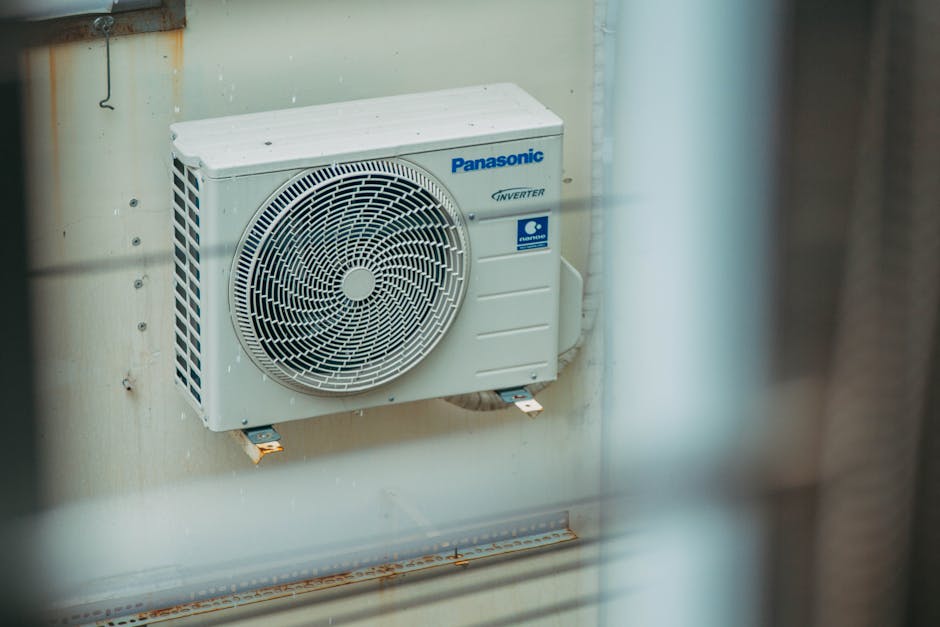
- The Outdoor Disconnect: Outside, near your condenser unit, you’ll find a metal box mounted to the wall. Inside this box is a "pullout" or a toggle switch. This is used by technicians to safely cut power during Services. Ensure the pullout is pushed in firmly or the switch is in the "On" position.
Inspecting the Electrical Panel and Circuit Breakers
If the switches are on and the thermostat is calling for cool air, the next stop is your home’s main electrical panel. AC units draw a significant amount of electricity—typically between 30 and 60 amps—and a power surge or a particularly hot day can cause a breaker to trip.
Your AC system actually uses two separate breakers: one for the indoor unit (the blower) and one for the outdoor unit (the compressor). If the indoor blower is running but you're only getting warm air, the outdoor breaker has likely tripped. If nothing is running at all, it could be either one.
Having an HVAC Protection Plan is a great way to ensure your electrical components are inspected annually to prevent these trips, which are often caused by loose connections or aging parts.
- Feature: Appearance; Tripped Circuit Breaker: Switch is moved to the middle or "Off" position; Blown Fuse: Metal filament inside is broken or glass is blackened
- Feature: Fix; Tripped Circuit Breaker: Flip fully OFF, then firmly back to ON; Blown Fuse: Must be replaced with an identical amperage fuse
- Feature: Commonality; Tripped Circuit Breaker: Found in almost all modern homes; Blown Fuse: Found in older homes or in the outdoor disconnect box
- Feature: Safety Warning; Tripped Circuit Breaker: If it trips again immediately, do not reset it; Blown Fuse: Frequent blowing indicates a short circuit
Power Supply Verification: AC Not Turning On What to Check First
When resetting a breaker, don't just "nudge" it. You must flip it completely to the "Off" position until you hear a click, then flip it firmly back to "On." Sometimes a breaker can look like it's in the "On" position even when it has internally tripped.
Also, check for secondary breakers. Some homes have sub-panels in the garage or basement, and some high-efficiency air handlers have their own internal breakers or fuses located inside the cabinet. If you’ve recently had a power outage or a lightning storm, check your GFCI outlets near the indoor unit as well; if one of those has tripped, it can cut power to the entire control circuit. If you’re tired of worrying about these electrical gremlins, an Air Conditioning Protection Plan can provide the peace of mind that comes with professional monitoring and repair coverage.
Addressing Airflow Restrictions and System Safety Shutdowns
Sometimes your AC refuses to turn on because it is trying to save itself. Modern systems are equipped with safety sensors that shut the unit down if they detect conditions that could cause permanent damage.
The most common culprit? A dirty air filter. When a filter is severely clogged with dust, pet hair, and debris, it restricts airflow across the evaporator coil. Without enough air to "warm" it up, the coil gets too cold and eventually freezes into a block of ice. This can cause the compressor to overheat, triggering a safety shutdown.
Regular AC Maintenance Tune-Up is the best way to avoid these "self-preservation" shutdowns. We recommend checking your filter every 30 to 60 days, especially during the peak of a Missouri summer.
Managing Condensate Drain Lines and Float Switches
Your AC doesn't just cool the air; it removes humidity. That moisture turns into water (condensate) that drips into a pan and flows out through a PVC pipe. Over time, algae or "slime" can grow in that pipe, causing a clog.
When the water can’t drain, it backs up into the drain pan. Most modern systems have a "float switch"—a small plastic device that sits in the pan or the drain line. When the water level rises, the switch floats up and breaks the electrical circuit, instantly shutting down the AC to prevent a flood in your home.
If you see standing water in your drain pan, you’ve found your problem. You can try using a wet/dry vacuum on the outside end of the drain pipe to suck out the clog, but if the water doesn't clear, you'll need professional help to flush the line.
Identifying Frozen Evaporator Coils
If you see ice on the copper lines leading to your outdoor unit, or if you notice a puddle of water under your indoor unit, your evaporator coil is likely frozen. This happens due to restricted airflow (dirty filters/closed vents) or low refrigerant levels.
If the coil is frozen, your HVAC system will not work properly. Do not try to scrape the ice off; you could puncture the delicate coils. Instead:
- Turn the system completely OFF at the thermostat.
- Switch the fan setting to "On" (not "Auto") to help circulate warm air over the ice.
- Wait 24 hours for the ice to thaw completely.
- Change your air filter.
Once thawed, try starting the system again. If it freezes back up immediately, you likely have a refrigerant leak that requires a licensed technician to repair.
Recognizing When Professional HVAC Intervention Is Necessary
While we love it when a homeowner can solve a problem with a simple flip of a switch, there are times when DIY troubleshooting ends and professional expertise must begin. If you've checked the thermostat, the breakers, and the filters, and the unit still won't budge, you're likely dealing with a component failure.
Electrical components like capacitors and contactors are the most frequent "no-start" culprits. A capacitor is like a giant battery that gives the motor the "kick" it needs to start spinning. If it's blown, you might hear a humming sound from the outdoor unit, but the fan won't spin. These parts carry high voltage and can be dangerous to handle without proper training. In these cases, AC Installation Replacement might even be discussed if the unit is more than 15 years old and repairs are becoming frequent.
Signs of Component Failure and Reset Procedures
Before you give up, look for a reset button on your outdoor unit. It’s usually a small, red button located near the bottom of the service panel. Press it once. If the unit starts up and stays running, you’re in the clear. However, if it trips again immediately, something is wrong internally.
Listen closely to your unit.
- Clicking: Usually means the thermostat is sending the signal, but the contactor (the switch that pulls in power) is failing.
- Humming/Buzzing: Often indicates a bad capacitor or a seized motor.
- Burning Smell: This is an electrical emergency. Turn off the power at the breaker immediately and call us.
If you suspect a refrigerant leak (indicated by hissing sounds or ice buildup), do not attempt to "top it off" yourself. Refrigerant handling requires specialized equipment and EPA certification.
Conclusion
Dealing with ac not turning on what to check first doesn't have to be a nightmare. By following these steps—checking your thermostat, power switches, breakers, and filters—you can often get your home back to a comfortable temperature in under 20 minutes.
At MyHappyHome™, we believe homeownership should be simple. That’s why our membership plans are designed to take the guesswork out of repairs. Instead of worrying about which capacitor failed or why a breaker keeps tripping, our members enjoy the peace of mind that comes with predictable maintenance and 24/7 support. Whether you need a quick fix or an AC Repair Service, we are here to ensure your home stays a "happy home" all summer long.
What is the very first thing to check if the AC won't start?
The absolute first thing to check is your thermostat. Ensure it has power (fresh batteries), is set to the "Cool" mode, and the temperature setting is significantly lower than the current room temperature. A surprising number of service calls are resolved simply by replacing two AA batteries or adjusting a setting.
Can a dirty filter really cause the whole system to shut down?
Yes, absolutely. A clogged filter restricts airflow, which causes the temperature of the evaporator coil to drop until it freezes. Most modern systems have high-pressure or thermal limit switches that will shut the entire system down to prevent the compressor from burning out due to the lack of airflow.
Why is my thermostat on but the outdoor unit is silent?
If your indoor fan is blowing but the outdoor unit isn't running, check the outdoor disconnect switch and the circuit breaker for the "AC" or "Condenser." If those are on, the most likely culprit is a failed start capacitor or a bad contactor in the outdoor unit, both of which require professional repair.