
Burning smell from outlets: causes and solutions
What a Burning Smell from an Outlet Is Telling You Right Now
If you've noticed a burning smell from outlets causes and solutions is exactly what you need — here's a fast answer before we go deeper:
Quick Answer: Common Causes and What to Do
- Cause: Overloaded circuit; What It Means: Too many high-wattage devices on one circuit; Immediate Action: Unplug devices, turn off breaker
- Cause: Loose or backstabbed connections; What It Means: Arcing and heat buildup at the outlet; Immediate Action: Stop using outlet, call electrician
- Cause: Outdated or aluminum wiring; What It Means: Oxidation and poor connections in older homes; Immediate Action: Turn off breaker, call electrician
- Cause: Worn or damaged outlet; What It Means: Internal components failing from age or use; Immediate Action: Stop using outlet, replace it
- Cause: Faulty appliance; What It Means: Device overheating and transferring heat to outlet; Immediate Action: Unplug appliance, test on another circuit
A burning smell from an outlet is not something to wait out. It means something inside your wall — wiring, insulation, or the outlet itself — is overheating. According to the U.S. Fire Administration, electrical malfunctions cause roughly 24,000 residential fires every year in the United States. The smell you're noticing is often your first and only warning before a hidden fire starts smoldering inside your walls.
The tricky part is that the problem can feel minor — a faint odor that comes and goes, no smoke, no visible damage. But as one electrical guide puts it: "Fires starting inside electrical components often spread unnoticed through wall cavities." By the time you see something, the situation is already serious.
I'm Matthew Palmieri, founder of MyHappyHome™, and my background in electrical systems and home services has shown me how often homeowners underestimate a burning outlet smell — making burning smell from outlets causes and solutions one of the most important home safety topics I cover. In the sections below, I'll walk you through exactly what's causing the smell, what to do right now, and how to make sure it never happens again.
Why an Electrical Burning Smell Is an Immediate Emergency
When you smell something burning near an outlet, your home is sending you an urgent distress signal. This isn't like a quirky sound from an old floorboard or a sticky door frame. An electrical burning smell means that thermal degradation is actively occurring behind your drywall. Under normal operating conditions, your electrical system should run completely silent, cool, and odorless. Any deviation from this is a sign of danger.

The Science of the Smell: Resistance Heating and Arcing Faults
To understand why this is an emergency, we have to look at what is actually happening to the physical materials inside your outlet box.
When electricity flows through a secure, well-designed path, it meets very little resistance. However, if that path is compromised—by a loose wire, a corroded terminal, or a worn-out internal contact—the electrical current must struggle to cross the gap. This struggle creates resistance heating.
As resistance increases, temperatures spike. If the gap becomes wide enough, the current may jump through the air to complete the circuit. This is called an arcing fault. While your home's wood framing ignites at around 451°F, electrical arcs can reach temperatures of several thousand degrees in a matter of microseconds. This extreme heat rapidly melts the surrounding plastic components and degrades the PVC (polyvinyl chloride) insulation protecting the wires.
PVC insulation begins to soften at around 140°F and breaks down completely above 167°F. As it degrades, it releases a distinct, highly unpleasant odor. Depending on the specific materials overheating, you might notice:
- A sharp, acrid chemical smell (melting plastic and PVC insulation).
- A fishy or ammonia-like odor (overheating resins and specialized electrical plastics).
- A metallic, ozone-like scent (active electrical arcing).
- A smoky, charred wood aroma (imminent or active combustion of the wall studs).
If you notice any of these signs, your home is already at risk. Recognizing these indicators early is one of the most critical Signs Your Home Needs Electrical Repair. Protecting your household from these hidden hazards is exactly why we prioritize robust Electrical Protection for every family we serve.
What to Do Immediately If You Smell Burning
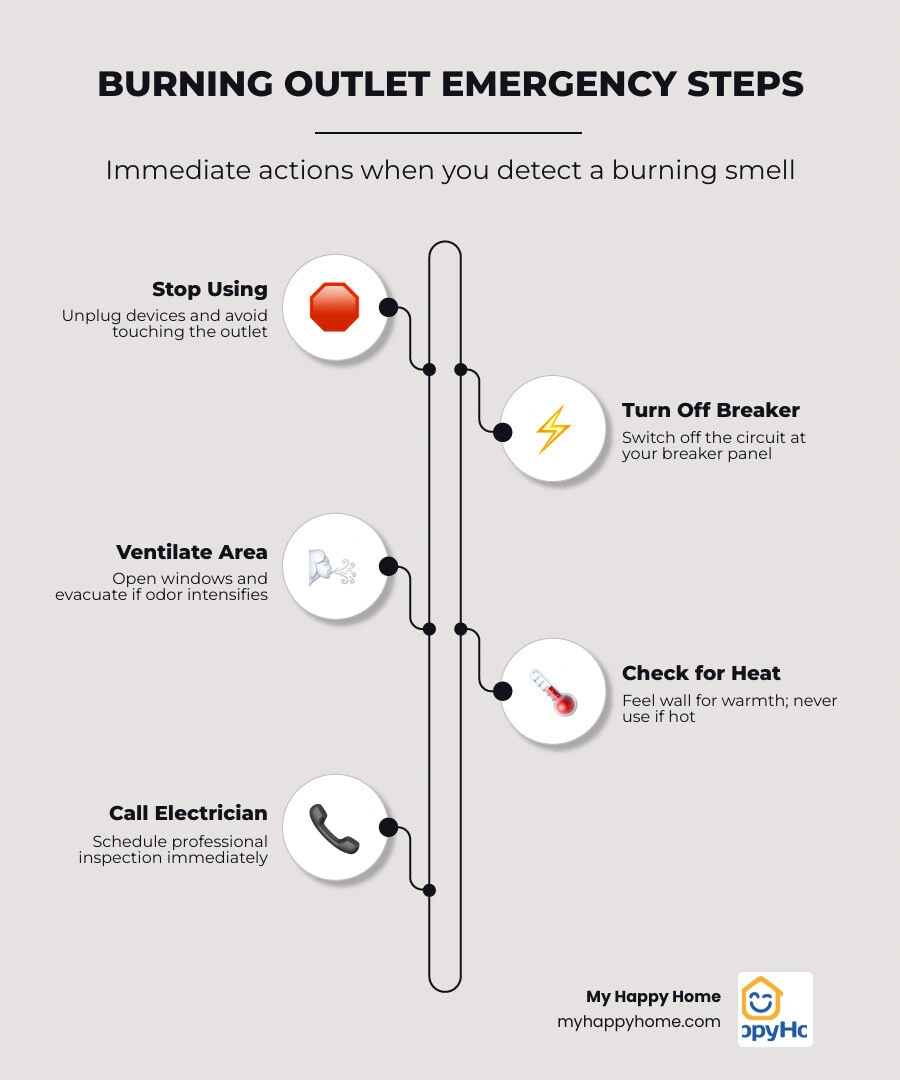
If you detect a burning odor coming from any outlet in your home, do not wait to see if it goes away. Take these immediate safety steps to protect your household:
- Stop Using the Outlet Immediately: Do not plug anything else into it, and do not touch the outlet faceplate with your bare hands, as it could be hot enough to cause burns or carry an active electrical charge.
- Unplug Connected Devices safely: If you can do so safely without touching the outlet itself, unplug any cords connected to the warm outlet. If you see sparks, smoke, or feel intense heat, skip this step.
- Shut Off the Circuit Breaker: Go directly to your home's main electrical panel. Locate the breaker that controls the room or outlet in question and flip it completely to the "OFF" position. If your breakers are not clearly labeled, or if you are unsure which switch controls that specific outlet, do not guess. Shut off the Main Power Breaker to cut electricity to the entire house.
- Perform a Temperature Check: Carefully place the back of your hand near—but not directly touching—the wall surrounding the outlet. If the drywall feels hot to the touch, or if you notice the burning smell intensifying even after the breaker is off, evacuate immediately.
- Evacuate and Call 911 if Necessary: If you see active smoke, sparks, or flames, or if the wall is hot, gather everyone in the home, exit the property immediately, and dial 911 from a safe distance. Electrical fires can smolder inside wall cavities for hours before breaking through the drywall.
- Leave the Power Off: Even if the smell dissipates after you turn off the breaker, do not turn the power back on. The underlying physical damage remains, and re-energizing the circuit will cause the overheating to start all over again. Keep the breaker off until a licensed professional can inspect the system.
Why You Need Burning Smell from Outlets Causes and Solutions Now
In June 2026, our homes are packed with more high-tech appliances, smart devices, and electric vehicle chargers than ever before. While our technology has advanced, the fundamental physical properties of electricity remain the same. Overloaded, outdated, or poorly maintained wiring simply cannot handle modern energy demands.
Ignoring an early warning sign like a burning odor is playing a dangerous game of chance. Breakers are designed to protect your home's wires from carrying too much current, but they cannot always detect a loose screw or localized resistance heating at a single outlet. That means an outlet can melt and catch fire while the breaker remains perfectly happy and active.
Understanding the primary burning smell from outlets causes and solutions allows you to act decisively, contact the right experts, and bring your home up to modern safety standards before a preventable disaster occurs.
Common Causes of a Burning Smell from Outlets
To safely address a burning outlet, we must first understand what causes these dangerous thermal events. Home electrical systems rely on solid connections and appropriate materials to safely distribute power. When any part of this system degrades, heat builds up rapidly.
Here is a quick look at how different wiring materials and system vulnerabilities impact your home's fire risk:
- Wiring / Connection Factor: Overheating Risk; Copper Wiring: Low (under normal loads and proper installation); Aluminum Wiring (Common 1965–1973): High (due to thermal expansion and oxidation)
- Wiring / Connection Factor: Connection Stability; Copper Wiring: Excellent; maintains shape under screw terminals; Aluminum Wiring (Common 1965–1973): Poor; prone to "cold flow" and loosening over time
- Wiring / Connection Factor: Oxidation Characteristics; Copper Wiring: Copper oxide is conductive and rarely causes issues; Aluminum Wiring (Common 1965–1973): Aluminum oxide is highly resistive, generating intense heat
- Wiring / Connection Factor: Common Failure Points; Copper Wiring: Overloaded circuits, backstabbed terminal failures; Aluminum Wiring (Common 1965–1973): Loose connections at screw terminals, arcing
Overloaded Circuits and High-Wattage Appliances
One of the most frequent causes of a burning smell is an overloaded circuit. Every electrical circuit in your home is rated for a specific maximum amperage—typically 15 or 20 amps. When you plug in too many devices, or run multiple high-wattage appliances (like space heaters, hair dryers, air fryers, or window air conditioners) on the same circuit, you draw more current than the system is designed to handle safely.
This continuous heavy draw heats up the wires along the entire circuit. If your electrical panel is older or failing, the breaker might not trip when it should. This continuous overload degrades wire insulation and creates a distinct hot plastic smell. To prevent this, it is essential to understand How a Panel Upgrade Supports Modern Electrical Demands, ensuring your home's infrastructure can handle your daily power needs.
Loose Connections and Backstabbed Outlets
Even if you aren't running heavy appliances, a loose connection inside the outlet box can cause severe overheating. Over years of use, the simple act of plugging and unplugging devices causes minor physical movement. This, combined with thermal cycling (the natural expansion and contraction of wires as they heat up and cool down), can loosen the screw terminals holding your household wires in place.
Another common culprit is "backstabbed" connections. Many residential-grade outlets allow installers to push bare wires directly into built-in spring clips on the back of the device rather than wrapping them securely around side screw terminals. Over time, these spring clips lose their tension. The loose connection creates a high-resistance point, leading to localized arcing, melted plastic, and a strong burning odor.
Outdated Wiring and Aluminum Connections
If your home was built between 1965 and 1973, there is a strong possibility it contains aluminum branch-circuit wiring. During this era, copper prices spiked, and builders turned to aluminum as a cost-effective alternative.
However, aluminum behaves very differently than copper. It expands and contracts significantly more under load, leading to a phenomenon known as "cold flow," where the wire gradually creeps out from under terminal screws. Furthermore, when aluminum is exposed to oxygen, it develops a layer of aluminum oxide. Unlike copper oxide, aluminum oxide is highly resistive to electrical current. This resistance generates intense heat at connection points, making homes with aluminum wiring significantly more prone to overheating and electrical fires.
Addressing these legacy issues is a top priority for home safety. If you suspect your home has outdated wiring or an aging electrical center, it is highly recommended to learn about the Signs Your Electrical Panel Needs an Upgrade to keep your household safe.
Professional Burning Smell from Outlets Causes and Solutions
When dealing with a burning smell, DIY troubleshooting should stop as soon as the power is turned off. Tracing electrical faults behind walls requires specialized diagnostic tools, extensive training, and a deep understanding of local building codes.
When you contact a professional, a licensed electrician will perform a comprehensive diagnostic process. They will use thermal imaging cameras to locate hidden hot spots behind your drywall, inspect adjacent outlets (since devices are often "daisy-chained" together on a single circuit), check for proper grounding, and safely replace damaged receptacles. For reliable, long-term safety, always rely on a certified Electrical Repair Service.
When to Upgrade vs. Repair Your Electrical System
If you have a single worn-out outlet in a modern home, a simple professional repair or device replacement is usually all that is needed. However, if your home has outdated wiring, recurring breaker trips, or an aging service panel, repairs may only act as temporary band-aids on a larger systemic issue.
In many cases, an upgrade is the safest and most cost-effective path forward. Upgrading your system can include:
- Installing Arc-Fault Circuit Interrupter (AFCI) breakers, which detect dangerous arcing conditions and shut off power before a fire can start.
- Upgrading your electrical panel to accommodate modern electrical demands.
- Replacing older, residential-grade outlets with heavy-duty, spec-grade models.
To determine the best path for your property, consider When to Upgrade from 100 Amp to 200 Amp Service and explore How a Modern Panel Improves Your Home Safety.
Long-Term Prevention: Burning Smell from Outlets Causes and Solutions
The best way to handle an electrical emergency is to prevent it from ever happening. Homeowners can proactively protect their properties by establishing simple, long-term safety habits:
- Avoid Overloading Outlets: Never daisy-chain power strips or plug multiple high-wattage appliances into the same outlet.
- Upgrade to Spec-Grade Devices: When replacing outlets, choose commercial-grade or spec-grade receptacles. These devices feature stronger internal spring contacts and secure screw-terminal connections, lasting significantly longer than cheap residential-grade alternatives.
- Schedule Routine Inspections: Just like your HVAC system or plumbing, your electrical system benefits from periodic checkups.
To keep your home's infrastructure in peak condition, schedule a professional Electrical Maintenance Inspection. For continuous, year-round peace of mind and protection against unexpected repair costs, consider enrolling in a comprehensive Electrical Protection Plan.
Frequently Asked Questions About Burning Outlets
Why does my outlet smell like burning plastic but there is no smoke?
A burning plastic smell without visible smoke is a classic early warning sign of resistance heating. This occurs when a localized connection point (such as a loose wire or a worn internal contact) gets hot enough to soften and degrade the PVC insulation of the wires or melt the plastic body of the outlet itself.
Because the overheating is contained inside the plastic outlet box or behind the drywall, it may not have reached the ignition temperature of wood or other combustible materials yet. Treat this odor as a fortunate early warning system—turn off the breaker immediately and call a professional before actual combustion and smoke begin.
Will a circuit breaker always trip if an outlet is overheating?
No, a standard circuit breaker will not always trip when an outlet is overheating. Standard breakers are designed to protect your home's wiring from overcurrent (carrying more total amperage than the wire is rated for) and short circuits.
However, they cannot detect localized heat caused by a loose wire or a poor connection. For example, if a loose terminal screw creates high resistance while drawing only 10 amps on a 15-amp circuit, the breaker will remain closed because the current is well within safe limits. Yet, that single loose connection can reach temperatures exceeding 1,000°F, melting the outlet and starting a fire while the breaker remains perfectly cool.
Can a faulty appliance cause a burning smell at the outlet?
Yes, a malfunctioning appliance can absolutely cause a burning smell at the wall outlet. If an appliance's motor is failing, or if its power cord is damaged or frayed, the device may draw significantly more current than normal, heating up both the plug and the outlet receptacle.
Furthermore, a damaged plug with bent or corroded prongs will create a loose, high-resistance connection inside the outlet, generating intense heat. If you suspect an appliance is the culprit, unplug it immediately and have both the device and the outlet inspected by a professional before using them again.
Conclusion
A burning smell from an outlet is a clear sign that your home's electrical system needs immediate attention. Whether it is caused by an overloaded circuit, a loose backstabbed connection, or outdated aluminum wiring, ignoring this warning sign puts your home and household at risk. By taking fast action—shutting off the breaker, unplugging devices safely, and calling in licensed professionals—you can resolve the issue before it escalates into a fire.
At MyHappyHome™, we believe homeownership shouldn't be stressful or filled with scary, unexpected repair bills. Our comprehensive home protection plans are designed to give you complete peace of mind, covering your essential HVAC, plumbing, electrical, and appliance systems under one affordable monthly subscription.
If you are experiencing a burning smell, flickering lights, or any other electrical concerns in O'Fallon, MO, don't wait for a minor issue to become a major emergency. Explore our home protection memberships, secure your household, and contact our expert team for dedicated Electrical Repair Service today.