
When to replace your electrical service panel
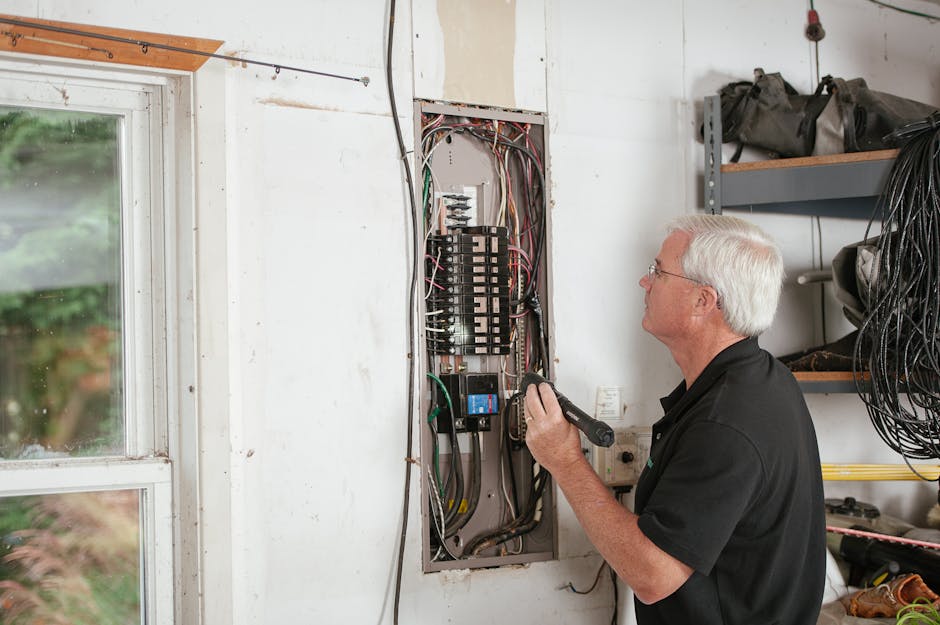
Is Your Home's Electrical Panel Keeping Up? Here's How to Tell
The signs your electrical panel needs an upgrade are often easy to miss — until something goes wrong. Your electrical panel is the heart of your home's power system. It takes electricity from the utility grid and distributes it to every light, outlet, and appliance in your house. When it starts to fail, your whole home feels it.
Most panels are built to last 25 to 40 years. But as of 2026, the average home uses three to four times more electricity than it did just a few decades ago. Older panels simply weren't designed for today's demands — think EV chargers, smart home devices, central AC, and a kitchen full of high-wattage appliances.
Here's a quick look at the most common warning signs:
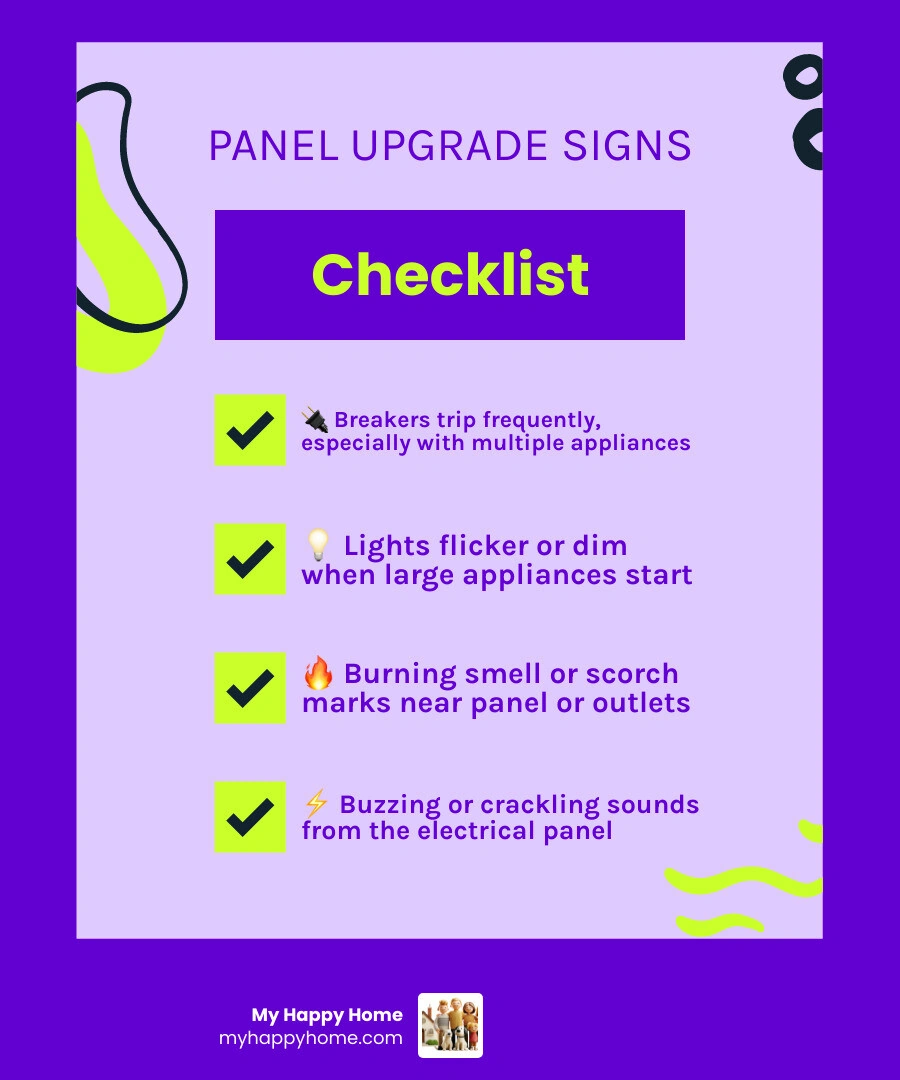
Signs your electrical panel needs an upgrade:
- Breakers trip frequently — especially when running multiple appliances at once
- Lights flicker or dim when large appliances like the AC or dryer kick on
- Burning smell or scorch marks near the panel or outlets
- Buzzing or crackling sounds coming from the panel
- The panel feels warm or hot to the touch
- Rust or corrosion visible on the panel box
- You still have a fuse box instead of a modern circuit breaker panel
- Your panel brand is Federal Pacific Electric or Zinsco — both are known safety hazards
- No room for new circuits — the panel is full or already uses tandem breakers
- Your home is over 25 years old and still has its original panel
If any of these sound familiar, your panel may be overdue for an inspection or replacement.
7 Critical Signs Your Electrical Panel Needs an Upgrade
In our experience serving homeowners in O'Fallon, MO, we’ve seen that an electrical panel rarely just "quits" all at once. Instead, it gives off subtle warnings. Ignoring these signs your electrical panel needs an upgrade can lead to more than just an inconvenient power outage; it can lead to hazardous conditions like electrical fires or permanent damage to your expensive electronics.
1. Frequent Circuit Breaker Tripping
Think of a circuit breaker as a safety gate. Its job is to "trip" or shut off when the electrical flow becomes too high, preventing the wires from overheating. If you find yourself walking to the garage or basement every week to flip a switch back on, your panel is telling you it’s maxed out. While an occasional trip might just mean you plugged too many things into one outlet, constant tripping suggests the panel itself can no longer handle your home’s total electrical load.
2. Flickering or Dimming Lights
Do your lights dim when the microwave starts? Or perhaps they flicker when the air conditioner kicks in during a humid O'Fallon summer? This is a classic sign of a voltage drop. Your appliances are "starving" for power, pulling so much current that there isn't enough left to keep the lights steady. This indicates that your panel's total amperage is insufficient for your modern lifestyle.
3. Burning Smells and Scorch Marks
This is an absolute emergency. If you detect a smoky, ozone-like, or "plastic" burning smell near your panel, or if you see black or brown discoloration on the breakers, shut off the main power immediately. These are signs of arcing or overheating wires. When connections loosen over 25 to 40 years, electricity can jump across gaps, creating intense heat that melts insulation and starts fires.
4. Rust and Corrosion
Water and electricity are a dangerous mix. If you see white powdery residue or orange rust on your panel, moisture has found its way in. This is common in older homes where the service entrance cable has deteriorated, allowing rainwater to "wick" directly into the panel. Rust creates resistance, and resistance creates heat, which eventually leads to panel failure.
5. Buzzing or Crackling Sounds
A healthy electrical panel should be silent. If you hear a hum, buzz, or a sound like frying bacon, it’s a sign of a bad connection or a breaker that is failing to trip. This "arcing" is a major fire risk and requires an immediate Electrical Repair Service to prevent a catastrophe.
6. The "Warm Touch" Test
Carefully place your hand on the door of your electrical panel. It should feel cool. If the metal feels warm or hot to the touch, the system is overloaded or the internal bus bars are failing. Heat is the number one enemy of electrical components, and a hot panel is a panel on the verge of a breakdown.
7. Reliance on Power Strips and Extension Cords
If your living room looks like a web of extension cords, your home’s original electrical design is likely outdated. Relying on power strips is a symptom of having too few circuits. Upgrading your panel allows us to install dedicated circuits for your home office, entertainment center, or kitchen, reducing the risk of a localized fire from an overloaded outlet.
Recalled Brands and Signs Your Electrical Panel Needs an Upgrade
Not all panels are created equal, and some were doomed from the start. If your home was built between the 1950s and the 1980s, you might have a "ticking time bomb" in your wall.
- Federal Pacific Electric (FPE): These panels were installed in millions of homes until the mid-80s. The "Stab-Lok" breakers are notorious for failing to trip when they should. In some tests, these breakers failed to trip up to 60% of the time, leading to thousands of structure fires annually.
- Zinsco Panels: These panels often have a design flaw where the breakers melt to the bus bar. This means the breaker can never trip, even during a massive surge, effectively sending unlimited current through your home's wiring.
If you see these brand names on your panel door, we strongly recommend an immediate replacement, regardless of whether you’ve noticed other symptoms. They are widely considered unsafe by modern 2026 safety standards.
Professional Assessment of Signs Your Electrical Panel Needs an Upgrade
Determining if you need an upgrade isn't just about looking for rust. A licensed professional from our team will perform a comprehensive Electrical Maintenance & Inspection. This involves a "Load Calculation" per NEC Article 220. We look at the square footage of your home, the number of fixed appliances (like your water heater and stove), and your specialized needs (like a home workshop or EV charger).
We also check for "voltage drops" and ensure your grounding system meets current codes. If your panel is over 40 years old, an upgrade is almost always the safest and most efficient path forward.
Why Older Systems and Fuse Boxes Are Inadequate for 2026
If you still have a fuse box, you're essentially using 1950s technology to power a 2026 world. While fuses themselves are actually quite reliable at blowing when there's an overload, the boxes they sit in are at least 60 years old.
- Feature: Standard Capacity; Old Fuse Boxes: 30 - 60 Amps; Modern Circuit Breakers: 200 - 400 Amps
- Feature: Safety Mechanism; Old Fuse Boxes: Metal filament melts (one-time use); Modern Circuit Breakers: Mechanical switch (resettable)
- Feature: Modern Demand; Old Fuse Boxes: Inadequate for AC, EVs, or Dryers; Modern Circuit Breakers: Designed for high-wattage loads
- Feature: Insurance Status; Old Fuse Boxes: Often penalized or denied coverage; Modern Circuit Breakers: Standard for all providers
- Feature: Fire Risk; Old Fuse Boxes: High (due to "oversafing" or age); Modern Circuit Breakers: Low (includes AFCI/GFCI protection)
The Danger of "Oversafing"
One of the biggest risks with fuse boxes is "oversafing." This happens when a homeowner gets tired of a 15-amp fuse blowing and replaces it with a 20 or 30-amp fuse. Now, the fuse won't blow, but the wires behind the wall will get hot enough to ignite the wood studs before the fuse ever reacts. Modern circuit breakers prevent this by being sized specifically to the wire gauge they protect.
NEC Minimums and Insurance Hurdles
According to NEC 230.79, 60-amp service is now below the minimum requirements for new one-family dwellings. Most insurance companies in Missouri will either charge a significantly higher premium or flat-out refuse to insure a home with a fuse box or 60-amp service. Upgrading to a 200-amp standard not only makes your home safer but often pays for itself through lower insurance rates and increased home value.
For those looking to bring their home into the modern era, an Electrical Installation & Upgrade is the best starting point.
When Modern Lifestyle Demands and Hazards Require Action
Our lives have changed drastically since the 1990s. In fact, electrical demands in the average O'Fallon household have tripled or quadrupled in that time. We aren't just plugging in a toaster and a lamp anymore.
The EV Revolution
A Level 2 EV charger is one of the most common reasons we see for an upgrade today. These chargers require a dedicated 240-volt, 40- to 50-amp circuit. If your home only has 100-amp service, adding an EV charger could mean you can't run your AC and your dryer at the same time without tripping the main breaker.
Heat Pumps and HVAC
As we move toward more energy-efficient heating, many homeowners are switching to heat pump systems. These systems can add 15 to 60 amps of demand depending on the size of the unit. Without a panel upgrade, your new, efficient HVAC system might struggle to get the "jump start" current it needs to run properly.
Smart Homes and Additions
Every smart speaker, security camera, and connected appliance adds to the "vampire load" of your home. Furthermore, if you are planning a home addition exceeding 500 square feet, local codes almost always require a panel expansion to handle the new lighting and outlet loads.
Protecting these investments is key, which is why we often recommend Electrical Protection measures, including whole-home surge protectors, during a panel upgrade.
Modern Amperage Needs and Signs Your Electrical Panel Needs an Upgrade
How much power do you actually need? In 2026, the answer is almost always "more than you think."
- 100-Amp Panel: This supports approximately 10,000 watts of continuous load. This was the standard in the 1970s but is considered "bare minimum" today. It’s often insufficient for homes with electric heating, central AC, or an EV.
- 200-Amp Panel: This is the modern standard for an average-sized family home. It supports approximately 20,000 watts and provides enough "headroom" for a modern kitchen, laundry, and cooling needs.
- 400-Amp Panel: Recommended for larger homes (over 3,500 sq. ft.) or those with significant "luxury" loads like heated pools, hot tubs, or multiple EV chargers.
Future-proofing your Electrical system ensures that when the next great piece of technology comes out, you won't have to worry about whether your home can handle it.
Frequently Asked Questions About Electrical Panels
How long do electrical panels typically last?
Most electrical panels are designed to last between 25 and 40 years. However, this lifespan can be shortened by factors like high humidity, dust accumulation, or frequent power surges. Even if a panel looks fine on the outside, the internal breakers should be replaced on average every 25-30 years to ensure they still trip accurately during an overload.
What are the benefits of upgrading an electrical panel?
The primary benefit is safety. You significantly reduce the risk of electrical fires and shocks. Beyond that, you'll enjoy:
- Consistent Power: No more flickering lights or struggling appliances.
- Increased Home Value: A 200-amp panel is a major selling point for buyers.
- Energy Efficiency: Modern panels often utilize better materials (like copper bus bars instead of aluminum), which can slightly reduce energy waste.
- Room for Growth: You can finally add that hot tub or finished basement you've been dreaming of.
Why should I hire a professional for a panel upgrade?
Attempting a DIY panel upgrade is extremely dangerous. Even when you turn off the "Main Breaker," the service lugs — the large wires coming from the street — remain energized with lethal voltage.
A licensed professional handles the complex process of:
- Permitting: Ensuring the work is legal and meets O'Fallon building codes.
- Utility Coordination: Working with the power company to safely disconnect and reconnect the service.
- Code Compliance: Installing modern AFCI (Arc-Fault Circuit Interrupter) and GFCI (Ground-Fault Circuit Interrupter) breakers where required.
- Labeling: Ensuring every circuit in your home is accurately identified.
For total peace of mind, many of our members choose an Electrical Protection Plan to ensure their system is monitored and maintained year-round.
Conclusion
Your electrical panel shouldn't be a source of stress. Recognizing the signs your electrical panel needs an upgrade is the first step toward a safer, more comfortable home. Whether you're dealing with the annoyance of flickering lights or the genuine danger of a recalled Federal Pacific panel, taking action now prevents costly emergencies later.
At My Happy Home, we believe homeownership should be simple. Our membership plans are designed to remove the guesswork from repairs and maintenance. From the "Happy Home Promise" to our network of vetted, licensed technicians, we’re here to ensure your home’s "heart" keeps beating strong.
Ready to ensure your home is ready for the future? We serve the O'Fallon, MO area with pride and expertise. Check out our full range of Services to see how we can protect your home.