
Stop living in a bubble and improve your indoor air quality

Why Indoor Air Quality at Home Affects Your Family More Than You Think
Knowing how to improve indoor air quality at home is one of the most important things you can do for your family's health — and the good news is, many of the best steps cost little to nothing.
Quick answer: How to improve indoor air quality at home
- Control pollution sources — stop indoor smoking, switch to low-VOC cleaners, and fix moisture problems
- Improve ventilation — open windows when outdoor air is clean, run exhaust fans in kitchens and bathrooms
- Use air filtration — run a HEPA air purifier in rooms where your family spends the most time
- Control humidity — keep indoor humidity between 30% and 50% using a dehumidifier or hygrometer
- Clean regularly — vacuum with a HEPA-filter vacuum, dust with damp microfiber cloths, and wash bedding weekly
Here is something most families do not realize: the air inside your home can be 2 to 5 times more polluted than the air outside. In some cases — like during painting or cleaning — indoor pollutant levels can spike to 100 times higher than outdoor levels. And since Americans spend roughly 90% of their time indoors, that exposure adds up fast.
For busy parents, this matters a lot. Stale air, hidden mold, gas stove fumes, and everyday cleaning products can quietly affect how your kids sleep, breathe, and feel — without any obvious warning signs. The problem is easy to overlook because you cannot always see, smell, or taste what is in your air.
The good news? You do not need to overhaul your home or spend a fortune. A few smart, consistent habits — guided by what the EPA and health experts actually recommend — can make a real difference for your family.
I'm Matthew Palmieri, founder of MyHappyHome™, and my background spans HVAC systems, home maintenance, and the kind of hands-on home service experience that makes understanding how to improve indoor air quality at home second nature. Let's walk through exactly what works — room by room, step by step.
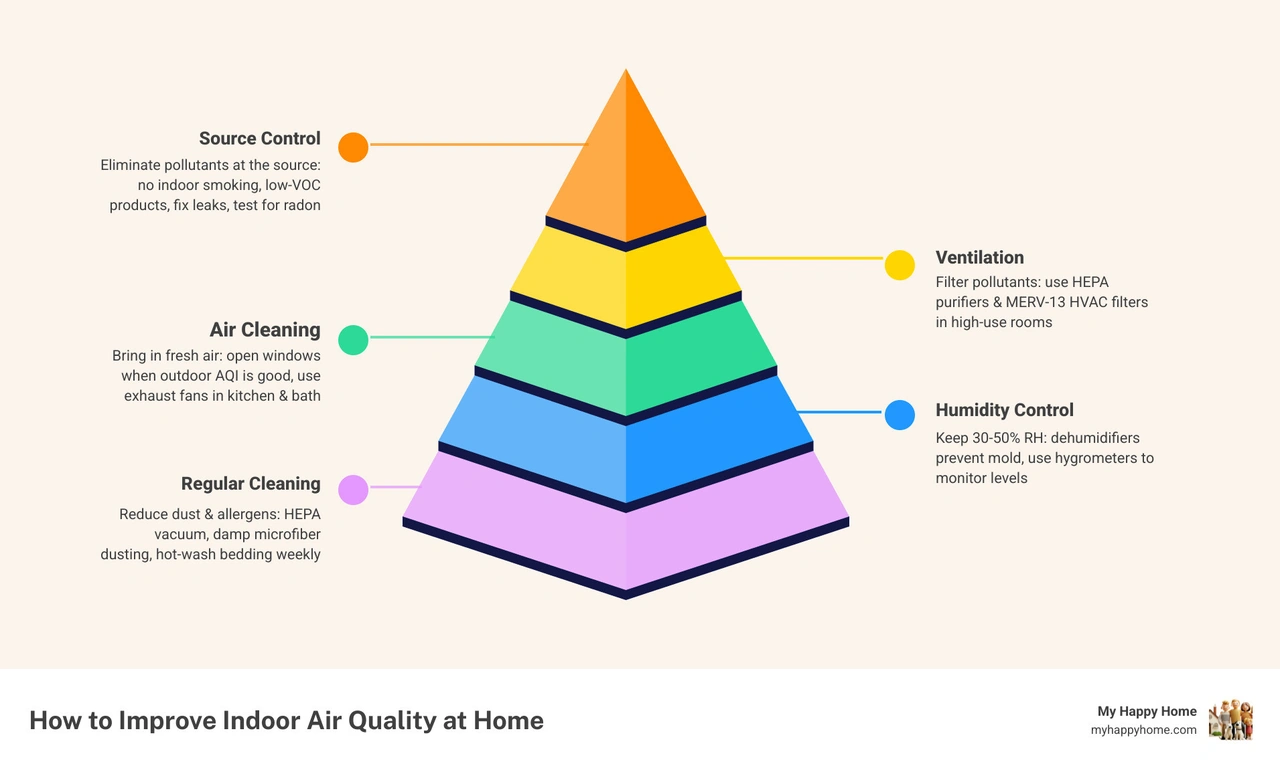
How to improve indoor air quality at home: start with the biggest risks
Indoor air matters because it affects us where we spend most of our lives. Fine particles like PM2.5, gases such as carbon monoxide, radon, chemical vapors from VOCs, mold spores, dust mites, pet dander, smoke, and even residue from old smoke can all build up indoors.
Why indoor air quality matters for your health
Poor indoor air can trigger short-term symptoms like:
- Eye, nose, and throat irritation
- Headaches
- Dizziness
- Fatigue
- Coughing or wheezing
It can also contribute to bigger long-term concerns, including asthma flare-ups, allergy symptoms, heart and lung stress, and in some cases serious disease. Radon exposure is the second leading cause of lung cancer in the United States, and carbon monoxide can become dangerous quickly.
People with asthma, allergies, COPD, young children, older adults, and anyone with heart or lung conditions are often the first to notice poor air quality. But even healthy people may feel the effects of stale, dusty, smoky, or overly humid indoor air.
The most common indoor air pollutants and where they come from
A lot of pollution comes from normal daily life:
- Gas stoves and ovens can release nitrogen dioxide and other combustion byproducts.
- Candles, incense, and fireplaces create particle pollution indoors.
- Cleaning sprays, air fresheners, paint, and solvents can release VOCs.
- New furniture, flooring, and pressed-wood products may off-gas chemicals like formaldehyde.
- Pets shed dander.
- Bedding, carpets, and upholstered furniture can harbor dust mites.
- Bathrooms, basements, and laundry areas can collect moisture and grow mold.
- Attached garages may allow vehicle fumes or stored chemical vapors to drift inside.
- Tobacco and vape products add secondhand exposure, and thirdhand smoke can linger on walls, fabrics, and surfaces.
Signs your home air may be unhealthy
A home does not need to smell terrible to have poor air quality. Common warning signs include:
- Persistent stale or musty odors
- Condensation on windows
- Visible mold spots
- Lingering smoke or cooking smells
- Lots of dust returning soon after cleaning
- Worsening allergies indoors
- More coughing, headaches, or fatigue at home than elsewhere
The 3 EPA strategies that work best in real homes
The EPA’s three main strategies are simple and practical:
- Source control
- Improved ventilation
- Air cleaning and filtration
Moisture control supports all three, because damp conditions feed mold and dust mites. In most homes, the best order is source control first, ventilation second, and air cleaning as support.
Source control: the most effective first step for how to improve indoor air quality at home
Source control usually gives the biggest payoff because it stops pollution before it spreads.
Good examples include:
- Make your home smoke-free
- Reduce candle and incense use
- Choose low-VOC paint and fragrance-free cleaners
- Store solvents, fuels, and strong chemicals away from living areas
- Fix plumbing leaks quickly
- Dry wet materials fast to prevent mold
- Test for radon, especially in lower levels of the home
- Maintain fuel-burning appliances and use direct-vent equipment where appropriate
- Never idle vehicles in an attached garage, even with the door open
If we only do one thing, source control is usually the smartest place to start.
Ventilation: when to open windows, use exhaust fans, and keep them closed
Ventilation helps dilute indoor pollutants, but timing matters.
Best practices include:
- Open windows on opposite sides of the home for cross-ventilation when outdoor air is clean
- Run bathroom fans during showers and for about 20 to 30 minutes after
- Use the kitchen exhaust fan every time you cook, especially when frying or using gas
- Keep windows closed on high-pollen days if allergies are a problem
- Keep windows closed when outdoor air quality is poor, including smoke events
- Increase ventilation during painting, cleaning, sanding, or similar activities
For apartments, exhaust fans and local ventilation matter even more since you may have fewer window options and shared walls. During remodeling, isolate the work area and ventilate it outdoors as much as possible.
Air cleaning and filtration: what these tools can and cannot do
Air cleaning helps, but it is not magic. A good purifier can remove airborne particles, but it cannot solve every problem.
What air cleaners do well:
- HEPA filtration captures very small airborne particles
- Portable cleaners help with dust, pollen, pet dander, and smoke particles
- Activated carbon can help reduce some odors and gases
What they do not do well:
- They do not fix leaks or mold moisture sources
- They do not remove radon
- Many are limited against gases unless they include enough carbon
- Ozone generators should be avoided because ozone itself irritates the lungs
For HVAC systems, higher-efficiency filters such as MERV-13 can improve particle capture if your system supports them without airflow problems.
Room-by-room ways to cut pollution at the source
The fastest wins usually come from changing a few habits in the rooms where pollution starts.
Kitchen and living areas: safer cooking, candles, and daily habits
Cooking is one of the biggest particle sources in many homes, especially frying, searing, broiling, or cooking on gas.
To cut kitchen pollution:
- Run a range hood that vents outdoors if you have one
- If your hood recirculates, still use it, but add window ventilation when outdoor air is good
- Use back burners when possible so the hood can capture more fumes
- Keep pans from smoking like they are auditioning for a barbecue competition
- Avoid burning candles and incense regularly
- Skip heavily scented air fresheners
Simple entryway habits help too:
- Leave shoes at the door
- Use doormats inside and outside entrances
- Wipe pet paws when they come in
These steps reduce dirt, pollen, and outdoor particles from hitchhiking across the house.
Bedrooms and allergy zones: bedding, pets, and dust control
Bedrooms matter because we spend hours there every night.
Helpful habits include:
- Wash bedding weekly
- If dust mites are a problem, hot water around 130 degrees F is often recommended for killing them
- Use mattress and pillow covers designed to reduce allergen buildup
- Vacuum rugs and carpets with a HEPA-filter vacuum
- Dust with a damp microfiber cloth instead of dry dusting that sends particles back into the air
- Reduce clutter that traps dust
- Keep pets out of the bedroom if allergies are severe
- Wash curtains and clean upholstered surfaces regularly
For allergy-prone households, a portable HEPA purifier in the bedroom is often one of the most useful upgrades.
Bathrooms, basements, and laundry: moisture and mold prevention
Humidity control is a major part of cleaner air. Most guidance points to an ideal indoor humidity range of about 30% to 50%. Above that, mold and dust mites become more comfortable than we want them to be.
To control moisture:
- Use a hygrometer to track humidity
- Run bathroom fans during and after showers
- Repair leaks fast
- Clean up condensation on windows or pipes
- Use a dehumidifier in damp basements
- Make sure the clothes dryer vents outdoors properly
- Avoid letting wet towels or laundry sit for long periods
If mold appears, fix the moisture problem first. Small mold on hard surfaces can often be cleaned carefully with soap and water while using gloves and proper protection. Large or recurring mold problems need professional attention.
No-cost or low-cost habits that help nearly every home:
- Open windows when outdoor air is good
- Use kitchen and bath fans consistently
- Stop indoor smoking and vaping
- Replace or clean HVAC filters on schedule
- Dust with damp microfiber
- Vacuum regularly with a sealed HEPA vacuum
- Wash bedding weekly
- Keep humidity in range
- Reduce scented products
- Fix leaks quickly
Choose the right filters, purifier, and maintenance routine
Cleaner air is easier to keep when your equipment is doing its job.
How to choose an effective air purifier or HEPA filter
When shopping for a portable air cleaner, look at performance first, not just promises on the box.
What to look for:
- True HEPA filtration for particles
- A unit sized for the room
- CADR that matches the room’s square footage
- A sealed design so dirty air is less likely to leak around the filter
- Activated carbon if odors or some VOCs are a concern
- A noise level you can actually live with
Placement matters too. Put the purifier in the room where you spend the most time, with space around it for airflow. A purifier crammed behind a chair is basically on a coffee break.
HVAC filters and tune-ups that support cleaner indoor air
Your HVAC system affects how air moves through the house, so maintenance supports air quality.
Key basics:
- Use the best filter your system can handle
- Change filters as recommended or sooner if they load up quickly
- Keep return vents clear
- Watch for reduced airflow from dirty filters
- Make sure seasonal tune-ups are not skipped
If you want to learn more about system upkeep, these guides are useful:
- How a tune-up improves efficiency and lowers bills
- AC tune-up guide: what to expect
- How often should you schedule an AC tune-up
How to improve indoor air quality at home with better system performance
When a system struggles, air quality can suffer too. Weak airflow, clogged filters, icing, or thermostat issues can all reduce comfort and circulation.
If your system seems off, these resources can help you spot common problems:
- How to check your thermostat before calling for AC repair
- AC troubleshooting tips before calling a pro
- Why is my AC blowing warm air? Troubleshooting steps
- AC not turning on? What to check first
- Ice forming on your AC unit: causes and what to do
- AC circuit breaker keeps tripping: what it means
Test, monitor, and know when to get professional help
Some pollutants need actual testing, because our noses are not scientific instruments no matter how confident they feel.
What to test for at home and when to test it
Start with the basics:
- Test for radon, especially in the lowest lived-in level of the home
- Install carbon monoxide alarms near sleeping areas
- Keep smoke alarms working and test them regularly
- Track humidity with a hygrometer
- Consider VOC or particle monitors after renovation, painting, or new furniture installation
Radon is especially important because you cannot see or smell it. If a radon test shows high levels, mitigation should be handled properly. If your home has suspected asbestos or lead in older materials, do not disturb them casually.
Apartment residents should document recurring problems like mold, leaks, or poor ventilation and report them promptly to property management.
Do houseplants help clean indoor air?
Houseplants are great for mood and decor. For meaningful air cleaning in real homes, though, the evidence is limited. Research does not support the idea that a normal number of houseplants can replace ventilation or filtration.
They may still be worth keeping if you enjoy them, but:
- Do not rely on them as your main air strategy
- Avoid overwatering
- Watch for mold growth in soil
- Be cautious if plant-related mold or pollen affects allergies
In short: nice to have, not a substitute for a fan, filter, or fixing the actual problem.
When poor indoor air quality needs expert attention
It is time to bring in help when you notice:
- Persistent respiratory symptoms at home
- Recurring or widespread mold
- Combustion or gas odors
- High radon test results
- Ongoing humidity above target range
- Major symptoms in children, older adults, or anyone with asthma or heart/lung conditions
If the issue involves HVAC airflow, filtration, or ventilation performance, professional service can help identify what is really going on.
Frequently Asked Questions about how to improve indoor air quality at home
What low-cost or no-cost steps can I take today?
Start here:
- Open windows for 10 minutes when outdoor air is clean
- Run kitchen and bathroom exhaust fans
- Stop smoking or vaping indoors
- Remove candles and heavily scented products
- Change a dirty HVAC filter
- Dust with a damp microfiber cloth
- Vacuum with a HEPA-filter vacuum
- Wash bedding this week, not someday
These are simple, but they work.
How can I improve air quality if I have allergies, asthma, or pets?
Focus on particles and moisture:
- Use a HEPA purifier in the bedroom or main living area
- Keep humidity between 30% and 50%
- Wash bedding weekly
- Use allergen-reducing mattress and pillow covers
- Groom pets regularly
- Vacuum and dust on a routine
- Keep the sleeping area cleaner and lower clutter
Also, use outdoor air carefully. If pollen counts are high, opening windows may make symptoms worse.
What should I do during cooking, painting, or remodeling?
These activities can cause big indoor pollution spikes.
Best precautions:
- Ventilate outdoors when possible
- Run local exhaust fans
- Isolate the area from the rest of the home
- Choose low-VOC products when available
- Keep children, older adults, and sensitive family members away
- Continue ventilation after the work is done, not just during it
Conclusion
If we want a healthier home, the formula is refreshingly simple: reduce pollution at the source, ventilate wisely, clean and filter the air, and keep humidity under control. That is the real answer to how to improve indoor air quality at home.
The good news is that better air usually comes from steady habits, not dramatic changes. A cleaner filter, a working bath fan, fewer scented products, and a little attention to moisture can go a long way.
And if your home’s comfort system is making airflow, filtration, or ventilation harder than it should be, we are here to help you stay ahead of those issues. For more information, visit More info about HVAC services.