

Prepare Cooling System for Summer: Easy Steps

Why Getting Your Cooling System Ready for Hot Weather Matters Before Summer Arrives
Getting your cooling system ready for hot weather is one of the most important things you can do as a homeowner before temperatures climb — and the steps are simpler than most people think.
Here is a quick overview of what the process involves:
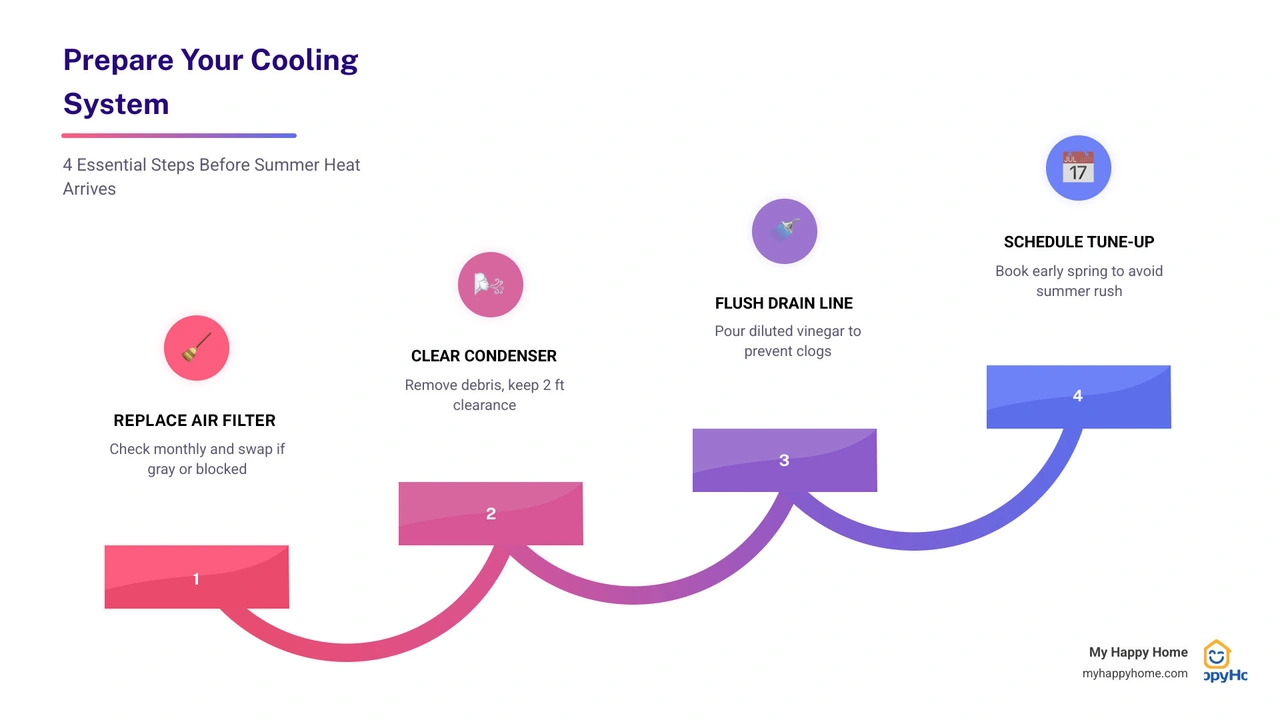
- Replace your air filter — Check it monthly and swap it out if it looks gray or blocks light.
- Clear the outdoor condenser unit — Remove debris and keep at least 2 feet of clearance on all sides.
- Test your thermostat — Switch to cooling mode and confirm cold air flows within a few minutes.
- Flush the condensate drain line — Pour diluted white vinegar down the line to prevent algae clogs.
- Run a pre-season system test — Let the AC run for 15–30 minutes and listen for anything unusual.
- Check your ductwork — Look for visible gaps, leaks, or sagging sections that waste cooled air.
- Schedule a professional tune-up — Book in early spring before HVAC companies fill up for summer.
Extreme heat is the leading cause of weather-related deaths in the United States every year — more than hurricanes, tornadoes, or floods. Yet around 80% of early-season AC failures are entirely preventable with basic spring preparation. The difference between a cool, comfortable home and an emergency service call on the hottest day of the year often comes down to a handful of simple maintenance steps that most homeowners skip.
When your cooling system is neglected through the off-season, dust builds up on coils, filters clog, drain lines grow algae, and small issues quietly get worse. Then the first real heat wave arrives — and your system either struggles to keep up or stops working entirely, right when every HVAC technician in town is already booked out for days.
The good news is that getting ahead of this is straightforward. Routine maintenance can reduce your cooling costs by 5% to 15% and meaningfully extend the life of your equipment. A little time invested now protects your home, your family, and your budget all summer long.
I'm Matthew Palmieri, founder of My Happy Home, and with a background spanning HVAC systems, smart home technology, and contractor operations, I've seen how proactive preparation keeps families cool and comfortable when getting your cooling system ready for hot weather makes all the difference between a smooth summer and a stressful one. The sections ahead walk you through every step — from DIY basics to knowing when to call a pro.
Understanding Extreme Heat and Staying Safe in O'Fallon, MO
Here in O'Fallon, Missouri, we are no strangers to summers that pack a serious punch. Extreme heat is officially defined as temperatures hovering ten degrees or more above the average high for a region, lasting for at least two to three consecutive days. When you combine our typical Midwestern summer heat with high humidity levels, the air feels significantly hotter than the thermometer reads.
This high humidity makes extreme heat particularly dangerous because it slows down our bodies' natural cooling mechanism—sweating. When sweat cannot evaporate off your skin efficiently, your core body temperature can rise rapidly. Extreme heat is responsible for the highest number of annual deaths among all weather-related hazards. This is why staying safe requires a mix of proper home preparation and smart personal habits.
To stay safe during these periods, we must focus on basic safety measures:
- Stay hydrated: Drink plenty of water throughout the day, even if you do not feel thirsty.
- Limit midday activity: Avoid high-energy activities, strenuous yard work, or exercise during the hottest midday hours.
- Wear appropriate clothing: Dress in loose, lightweight, and light-colored clothing to reflect heat.
- Mind your pets: Asphalt and dark pavement can severely burn pet paws during extreme heat. If it is too hot for you to hold the back of your hand to the pavement for seven seconds, it is too hot for your dog’s paws.
- Find a cooling center: If your home's air conditioning struggles or fails, know where local community cooling centers are—such as public libraries, community centers, or malls in the O'Fallon area.

Recognizing Heat-Related Illnesses
Recognizing the early warning signs of heat-related illnesses can save a life. There are three primary stages of heat illness to watch out for:
- Heat Cramps: These are painful muscle spasms, usually in the legs or abdomen, accompanied by heavy sweating.
- Treatment: Stop all activity, move to a cool place, and drink water or an electrolyte-rich sports drink. Do not return to strenuous activity for several hours.
- Heat Exhaustion: This is your body's warning that it is reaching its limit. Signs include heavy sweating, paleness, muscle cramps, tiredness, weakness, dizziness, headache, a fast or weak pulse, nausea, vomiting, or fainting.
- Treatment: Move to an air-conditioned room, loosen your clothing, take a cool shower or bath, and sip cool water. If symptoms worsen or last longer than one hour, seek medical attention.
- Heat Stroke: This is a life-threatening medical emergency. It occurs when the body can no longer control its temperature, which can quickly climb to 103°F or higher. Symptoms include red, hot, dry skin (with no sweating), a rapid and strong pulse, throbbing headache, dizziness, confusion, or loss of consciousness.
- Treatment: Call 9-1-1 immediately. While waiting for emergency personnel, move the person to a cool, shaded area. Cool them rapidly using cold, wet cloths or ice packs on their head, neck, armpits, and groin. Do not give them anything to drink if they are confused or unconscious.
Emergency Preparedness and Power Outages
During peak summer heatwaves, the local electrical grid in O'Fallon, MO, experiences maximum load, which increases the risk of localized power outages. If the power goes out when it is 95°F outside, your home can heat up surprisingly fast.
Being prepared means having a 72-hour emergency kit ready to go. Your kit should include:
- One gallon of water per person (and pet) per day.
- Non-perishable, high-energy foods that do not require cooking.
- A battery-operated or hand-crank weather radio.
- Flashlights and plenty of extra batteries.
- Portable, battery-operated personal fans.
- A fully stocked first-aid kit.
If you have a backup generator, ensure it has been serviced and has fresh fuel before the hot weather arrives. Always run generators outdoors and far away from windows to prevent carbon monoxide poisoning. If the power goes out, keep your windows, blinds, and doors closed to trap whatever cool air remains inside for as long as possible.
Getting Your Cooling System Ready for Hot Weather: Homeowner Checklist
Proactive system preparation is the single best way to ensure your air conditioner survives the summer. If your system has sat idle all winter, launching it straight into a 90-degree day without a warmup is like running a marathon without stretching.
Before the first heatwave arrives, we highly recommend performing a pre-season test cycle. Turn your thermostat to cooling mode, set the temperature a few degrees below the current room temperature, and let it run for 15 minutes. Check that cool air is blowing from your registers and listen for any grinding, squeaking, or rattling noises.
While you are testing, it is also a good time to check the age of your system. You can typically find the manufacture date on the nameplate of your outdoor condenser unit. If your air conditioner is approaching 10 to 15 years old, it may be nearing the end of its reliable lifespan. Catching a failing system in the mild days of spring gives you the time to plan, whereas waiting for a summer breakdown leaves you making rushed decisions in a hot house. For a complete guide on preparing your system, check out our resource on Spring AC Maintenance to Prevent Summer Failures.
Air Filter Care and Airflow Optimization
Your air filter is your system's first line of defense. A dirty, clogged filter restricts airflow, forcing your blower motor to work overtime. This extra strain not only spikes your energy bills but can also cause your indoor evaporator coil to freeze over, shutting down your system entirely.
For standard residential systems, we recommend choosing a pleated filter with a MERV (Minimum Efficiency Reporting Value) rating between 8 and 11. This range provides an excellent balance of high-efficiency filtration without restricting the airflow your system needs to breathe.
To determine if your filter is ready for retirement, try the simple "light test": hold the filter up to a bright light bulb or the sun. If the light cannot shine through the fibers, the filter is clogged and needs to be replaced. For a deeper look at how filters impact your home comfort, read about How Dirty Air Filters Destroy Your AC Performance.
Once your filter is clean, make sure your indoor airflow is fully optimized. Walk through your home and verify that all supply vents and return grilles are completely open and unobstructed by furniture, drapes, or rugs. Closing vents in unused rooms is a common mistake; doing so actually increases static pressure inside your ductwork, which can cause air leaks and reduce your system's overall efficiency.
Outdoor Condenser Maintenance and Shading
The outdoor condenser unit is responsible for releasing the heat captured from inside your home. If the metal fins on this unit are choked with grass clippings, leaves, dirt, or cottonwood seeds, the heat exchange process breaks down. In fact, dirty coils can reduce heat transfer efficiency by as much as 30%.
To clean your outdoor unit safely:
- Turn off the power to the AC at your thermostat and at the outdoor electrical disconnect box.
- Clear away any weeds, vines, or shrubs to establish a clear 2-foot clearance zone around the entire unit.
- Gently sweep away loose leaves and debris from the top and sides.
- Use a standard garden hose with a gentle spray nozzle to rinse the metal fins from the inside out. Never use a pressure washer, as the intense pressure will permanently bend and damage the delicate aluminum fins.
- If you spot bent fins, you can use a specialty tool called a fin comb to gently straighten them back into place.
Understanding how these parts interact makes it easier to appreciate why keeping them clean is so important. You can learn more about how your system beats the heat in our guide on How Your Air Conditioner Works Explained Simply.
Maximizing Energy Efficiency and Comfort During Summer Heatwaves
Optimizing your home’s energy efficiency is the key to staying comfortable without watching your utility bills skyrocket. During peak summer, solar heat gain—the heat that enters your home through windows—can account for up to 30% of your total cooling load.
Simple, passive cooling methods can make a massive difference in how hard your air conditioner has to work. To visualize the impact of these strategies, consider the comparison below:
| Energy-Saving Method | Estimated Cooling Load Reduction | Practical Tip |
|---|---|---|
| High-Quality Window Treatments | Up to 30% | Close south- and west-facing blinds during peak daylight hours. |
| Ceiling Fan Usage | Perceived 4°F cooling effect | Turn off fans when you leave the room; they cool people, not spaces. |
| Duct Sealing & Repair | 20% to 30% | Seal visible gaps in attic ducts with mastic tape. |
| Smart Thermostat Schedule | 10% to 15% | Raise the temperature 7–10 degrees when you are away from home. |
By combining these passive strategies with active system care, you can enjoy a cooler home and lower bills. Learn more about maximizing these benefits in our article on How a Tune-Up Improves Efficiency and Lowers Bills.
Thermostat Settings for Getting Your Cooling System Ready for Hot Weather
Managing your thermostat is one of the easiest ways to control summer cooling costs. The Department of Energy recommends setting your thermostat to 78°F when you are at home and awake. While this might sound warm to some, you can easily bridge the comfort gap by using ceiling fans to create a wind-chill effect, making the room feel up to four degrees cooler than it actually is.
If you are planning to upgrade your home comfort for the 2026 cooling season, consider installing a smart thermostat. These devices can save you significant money annually by automatically adjusting temperatures based on your daily routine.
Before the summer heat arrives, remember to:
- Replace the batteries in your thermostat to prevent sudden system shutdowns.
- Program your "away" schedule so the system raises the temperature by 7 to 10 degrees when the house is empty.
- Avoid turning your system completely off when you leave for work; restarting a hot, humid house actually consumes more energy than maintaining a moderate temperature throughout the day.
Sealing Duct Leaks and Improving Insulation
Your home's building envelope—the physical barrier between the indoor and outdoor environments—plays a massive role in your comfort. According to the Department of Energy, the average home loses 20% to 30% of its conditioned air to duct leaks. When your ductwork has gaps or loose connections, you are essentially paying to cool your attic or crawlspace instead of your living room.
If you have accessible ductwork in your basement or attic, inspect the joints for loose connections or air drafts while the system is running. Seal any visible leaks using professional-grade duct mastic or foil tape (avoid standard gray cloth "duct tape," which degrades quickly under temperature changes).
Additionally, check your attic insulation levels. Upgrading your insulation to meet modern energy standards keeps the heavy heat of your attic from radiating down through your ceilings. Finally, replace worn weather stripping around your doors and windows to keep the hot O'Fallon air outside where it belongs.
Preparing Your Vehicle for Extreme Summer Heat
Your home isn't the only thing that needs to be ready for the summer heat. Extreme temperatures are incredibly tough on vehicles, and nearly 8 million drivers request roadside assistance each summer. Overheating engines and tire failures consistently top the list of hot-weather automotive issues.
If you are planning summer road trips, taking a few minutes to prepare your vehicle can save you from a stressful afternoon stranded on the side of the highway.
Essential Car Fluid and Battery Checks
Hot weather accelerates the breakdown of your car's vital fluids and places immense stress on its electrical system. Perform these essential checks before hitting the road:
- Engine Oil: High temperatures cause engine oil to thin out and break down faster. Ensure your oil is clean and filled to the correct level.
- Coolant (Antifreeze): This is your engine's primary defense against overheating. Check the coolant reservoir when the engine is completely cold. Never open a hot radiator cap.
- Brake and Transmission Fluids: Extreme heat can cause degraded transmission fluid to slip, and old brake fluid can absorb moisture, reducing your stopping power.
- Battery Health: Many drivers associate battery failure with winter, but extreme summer heat actually causes more battery failures than cold weather by accelerating internal chemical degradation and evaporating battery fluid. Have any battery older than three years load-tested by a professional.
- Tire Pressure: As pavement temperatures rise, the air pressure inside your tires increases. Check your tire pressure in the morning before driving, and inflate them to the manufacturer’s recommended PSI (found on the driver's door jamb, not the tire sidewall).
When to Call a Professional for HVAC Service
While DIY maintenance goes a long way, there are several tasks that must be left to licensed professionals. Handling chemical refrigerants or working with high-voltage electrical components without proper certification is dangerous and can void your equipment's warranty.
You should call a professional technician immediately if you notice any of these warning signs:
- Weak Airflow: If you feel barely any air coming from your supply vents, it could point to a failing blower motor or severe duct blockages.
- Warm Air: If the system is running but blowing warm air, you may have a failed compressor or a refrigerant leak.
- Short Cycling: If your AC turns on and off rapidly every few minutes, it is placing massive wear on the compressor and failing to dehumidify your home.
- Strange Noises or Odors: Squealing, grinding, or burning smells are clear indicators of electrical or mechanical failure.
If your system isn't responding at all, you can run through a few basic checks yourself before calling for service. Our guide on AC Not Turning On: What to Check First is a great place to start. For additional troubleshooting, explore these AC Troubleshooting Tips Before Calling a Pro and learn how to identify issues early with Signs Your AC Needs Repair.
Professional Tune-Ups for Getting Your Cooling System Ready for Hot Weather
A professional preventative tune-up is a deep-dive inspection of your entire cooling system. During a standard visit, a certified technician will check your refrigerant levels, measure electrical draw, test safety controls, inspect the capacitor, clean the coils, and clear the condensate drain line.
Regular professional maintenance is the most effective way to catch minor issues before they turn into costly mid-summer breakdowns. If you are wondering what to expect during a service visit, read our detailed AC Tune-Up Guide: What to Expect. To understand how to structure your system's long-term care, check out our recommendations on How Often Should You Schedule an AC Tune-Up.
Frequently Asked Questions About Summer Cooling
How often should I replace my AC air filters in the summer?
During the peak summer cooling season, you should check your air filter every 30 days. For standard homes, replacing the filter every 1 to 3 months is sufficient. However, if you have pets, suffer from severe allergies, or live in a dusty area, you will likely need to replace it every 30 days to maintain healthy indoor air quality and proper airflow.
What are the signs that my AC is low on refrigerant?
Refrigerant does not get "used up" like gasoline in a car; it operates in a closed loop. If your refrigerant is low, you have a leak. Common signs of a refrigerant leak include warm air blowing from your vents, constant system operation without cooling the home, hissing or bubbling noises near the refrigerant lines, and ice physical buildup on the outdoor copper lines or indoor evaporator coil.
When is the best time to schedule professional AC maintenance?
The absolute best time to schedule your professional tune-up is in the early spring (March through May). During these months, HVAC companies have excellent appointment availability, allowing you to secure a convenient time slot before the peak summer rush begins and emergency service calls take priority.
Conclusion
Getting your cooling system ready for hot weather is all about taking proactive steps before the summer heat arrives. By handling simple DIY tasks like filter replacements and clearing outdoor debris, you can protect your comfort and prevent sudden system failures.
At MyHappyHome, we believe homeownership should be simple and stress-free. Our comprehensive home service membership plans provide predictable, worry-free coverage for your HVAC, plumbing, electrical systems, and major home appliances under one simple monthly plan. With 24/7 customer support and a trusted network of licensed, vetted professionals, we ensure that expert help is always just a call or click away.
Don't wait for the first major heatwave to find out if your air conditioner is up to the challenge. Protect your home and gain year-round peace of mind by exploring our AC Maintenance Tune-Up services today. Let us take the hassle out of home maintenance so you can stay cool and comfortable all summer long.

Get happy home tips delivered to your inbox.
Join the growing family of homeowners who have said goodbye to stress and hello to simple, worry-free living. With MyHappyHome, you're not just getting a service plan, you're getting a partner dedicated to your happiness.