
The definitive guide to sewer line problems signs and what to do

What Sewer Line Problems Signs and What to Do Actually Means for Your Home
Understanding sewer line problems signs and what to do could save you from a very expensive, very messy situation. Here is a quick summary before we dive deeper:
Common sewer line problem signs:
- Multiple drains slowing down at the same time
- Gurgling sounds from toilets or drains
- Sewage or rotten egg odors inside the home
- Water backing up in one fixture when you use another
- Soggy patches, unusually green grass, or sinkholes in the yard
- Recurring clogs that keep coming back within weeks or months
What to do:
- Stop using water in the home immediately
- Do not pour chemical drain cleaners down drains
- Locate your sewer cleanout pipe and check for standing sewage
- Call a licensed plumber for a professional camera inspection
- Ask about trenchless repair options before any digging begins
Most homeowners do not think about their sewer line until something goes very wrong. But the truth is, sewer line problems rarely appear out of nowhere. They usually start small — a drain that seems a little slow, a toilet that gurgles for a second after flushing, a faint smell you cannot quite place. Those small signs are your home trying to tell you something.
The challenge is knowing the difference between a simple clog you can clear and a deeper structural problem that will keep coming back no matter how many times you snake the drain. A clogged drain is a minor inconvenience. A failing sewer line is a health risk, a property damage risk, and a major expense — especially if you wait until it becomes an emergency.
Sewer lines in homes built before 1980 are particularly vulnerable. Vitrified clay pipes common in mid-century homes last roughly 50 to 60 years before joints crack and separate. Orangeburg pipe, used widely in the 1950s through 1970s, can deteriorate in as little as 30 years. If your home is over 40 years old and you have never had your sewer line inspected, the clock may already be running.
I'm Matthew Palmieri, founder of My Happy Home, and my background in plumbing services and home systems has shown me how many homeowners end up paying far more than necessary because they missed the early sewer line problems signs and what to do guidance that could have helped them act before a crisis hit. This guide walks you through everything you need to know — from spotting the first warning signs to understanding your repair options — so you can protect your home and your family before a small problem becomes a disaster.
Identifying Sewer Line Problems Signs and What to Do First
When it comes to your home's plumbing, there is a big difference between a "hair-on-fire" emergency and a minor annoyance. A single slow sink in the guest bathroom? That is probably just a bit of soap scum and hair. But when your home starts making sounds like a science experiment gone wrong, you are likely dealing with the main event: the sewer line.

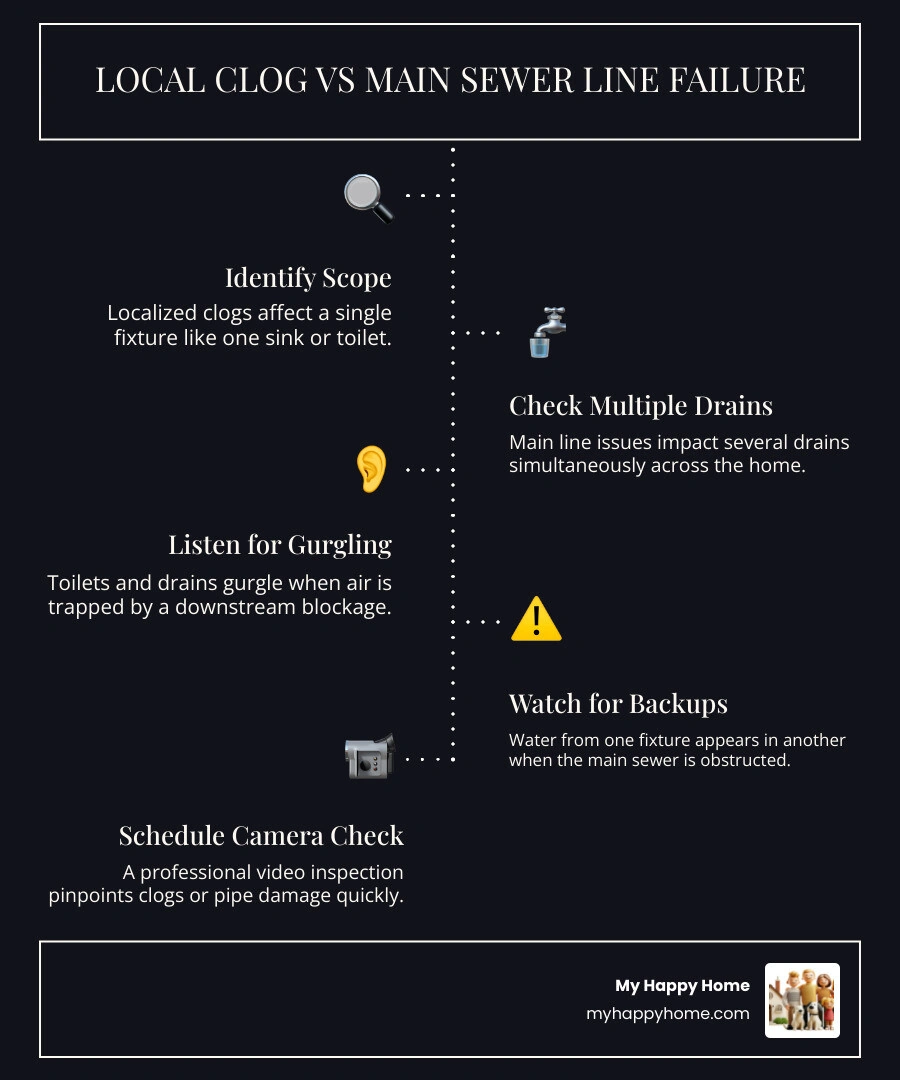
The first thing we tell homeowners in O'Fallon, MO, is to look for patterns. A sewer line problem is systemic. It affects the "trunk" of your plumbing tree, which means every "branch" (your individual drains) will eventually feel the effects. If you notice multiple slow drains occurring simultaneously, it is a major red flag.
Another early warning sign is the dreaded gurgle. If you flush the toilet and your shower drain starts "talking" back to you with a series of bubbles and pops, air is being trapped and pushed back through the system. This happens because a restriction in the main sewer line is preventing water and air from flowing freely to the municipal system.
And then, there is the smell. A functioning sewer system is airtight, designed to keep sewer gas (a toxic mix of hydrogen sulfide, methane, and ammonia) safely inside the pipes. If you start smelling rotten eggs in your basement or near your floor drains, the seal has been compromised. This is not just unpleasant; it is a health risk. In these cases, you need a professional Plumbing Repair Service to locate the source of the leak before the gas concentrations become dangerous.
Recognizing the Signs of a Main Line Blockage
How can you be sure the problem is in the main line and not just a tough clog in one pipe? Look for cross-fixture backups. This is a classic "what to do" diagnostic step. If you run your washing machine and water starts bubbling up into your kitchen sink, or if flushing the toilet causes water to rise in the bathtub, you have a main line blockage.
Wastewater always follows the path of least resistance. When the main line is blocked, that water has nowhere to go but back up into the lowest available drains. In many O'Fallon homes, this means the basement floor drains. If you see standing water or sewage around your floor drain, do not ignore it. This is a clear sign that your main line is failing.
One of the best things you can do is locate your sewer cleanout. This is usually a 3- or 4-inch pipe with a cap, located either in your basement or outside in the yard. If you unscrew that cap and see standing water or sewage, the blockage is definitely further down the line toward the street. At this point, skip the DIY fixes and call for professional Drain Cleaning & Repair to clear the path.
Outdoor Indicators of Sewer Line Problems Signs and What to Do
Sometimes, the most obvious sewer line problems signs and what to do are actually found outside your four walls. Because sewer lines are buried underground, a leak can act as an unintended irrigation system for your lawn.
- Lush, Green Grass: If one strip of your lawn looks like it belongs on a golf course while the rest of the yard is struggling in the Missouri summer heat, you might have a leak. The sewage acts as a potent fertilizer, causing hyper-growth in the grass directly above the pipe.
- Soggy Patches: Persistent wet spots or standing water in your yard when it hasn't rained recently are a major indicator of a broken or collapsed pipe.
- Sinkholes and Settling: If the soil above the pipe starts to dip or a small sinkhole forms, the leaking water may be washing away the dirt that supports the pipe, leading to a total collapse.
- Foundation Cracks: In extreme cases, a leaking sewer line under or near your home can saturate the soil, causing the foundation to settle or crack.
- Pest Activity: Rats and cockroaches love sewer lines. A sudden increase in pest activity can mean they have found a way out of the pipes through a crack and into your home's foundation.
Common Causes of Sewer Pipe Failure and Damage
Why do these lines fail in the first place? It is usually a combination of age, environment, and biology.
One of the most common culprits we see is tree root intrusion. Trees are incredibly smart; they "sense" the moisture and nutrients inside your sewer pipes. If there is even a tiny hairline crack or a loose joint, roots will find their way in. Once inside, they grow rapidly, creating a "root ball" that catches grease and debris, eventually leading to a total blockage.
Soil shifting is another major factor, especially in areas with expansive clay soil. As the ground expands and contracts with moisture changes, it puts immense pressure on the pipes. This can lead to "bellied" pipes—sections that sag and create a pool where waste collects—or even total collapses.
Regular Plumbing Maintenance & Inspection is the only way to catch these issues before they result in a flooded basement.
Understanding Pipe Material Lifespans
The material of your sewer line plays a massive role in how long it will last. If your home was built between 1950 and 1980, you likely have one of three materials that are reaching the end of their functional life in May 2026.
- Pipe Material: Vitrified Clay; Estimated Lifespan: 50–60 Years; Common Vulnerabilities: Very brittle; joints frequently separate; highly susceptible to tree roots.
- Pipe Material: Cast Iron; Estimated Lifespan: 50–75 Years; Common Vulnerabilities: Corrodes from the inside out; creates "scales" that catch debris; prone to rusting.
- Pipe Material: Orangeburg; Estimated Lifespan: 30–50 Years; Common Vulnerabilities: Made of wood pulp and tar; essentially "bituminous fiber"; prone to flattening and collapse.
- Pipe Material: PVC (Schedule 40); Estimated Lifespan: 100+ Years; Common Vulnerabilities: Modern standard; resistant to corrosion and roots; very durable.
If you are living in an older home, it is not a matter of if the pipe will fail, but when. Orangeburg pipe, in particular, is often referred to as "no-corrode" pipe, but in reality, it is more like a wet cardboard tube. If your home still has it, replacement should be a priority.
Professional Solutions and Modern Repair Options
The good news is that the days of having to dig a massive trench through your prize-winning rose bushes are largely over. Modern technology has revolutionized how we handle sewer line problems signs and what to do when repairs are needed.
The first step in any modern repair is a sewer camera inspection. We feed a high-definition waterproof camera through your line to see exactly what is happening. This reveals if you have a simple blockage, root intrusion, a belly in the pipe, or a total collapse. Seeing the problem on screen removes the guesswork and ensures you only pay for the repair you actually need.
Once the problem is identified, we may suggest a Sewer Line Repair Service that uses trenchless technology.
Professional Diagnosis for Sewer Line Problems Signs and What to Do
A camera inspection is the "gold standard" for diagnosis. It allows us to:
- Pinpoint the Location: We can tell exactly how many feet from the house the break is, which minimizes the area we need to access.
- Assess Structural Integrity: We can see if the pipe is just dirty (needing hydro jetting) or if it is structurally compromised (needing repair).
- Identify the Culprit: Whether it is a "flushable" wipe stuck on a burr or a massive root system, the camera doesn't lie.
Trenchless vs. Traditional Repair Methods
When a repair is necessary, you generally have two main paths:
1. Trenchless Pipe Lining (CIPP): Also known as "Cured-In-Place Pipe," this method involves inserting an epoxy-saturated felt tube into your existing pipe. Once in place, the tube is inflated and the epoxy cures, creating a brand-new, seamless pipe inside your old one. It is essentially a "pipe within a pipe" that can last 50+ years. This is a favorite for homeowners who want to avoid tearing up driveways or landscaping.
2. Trenchless Pipe Bursting:If the old pipe is too collapsed for lining, we use pipe bursting. A large cone-shaped head is pulled through the old pipe, shattering it outward while simultaneously pulling a brand-new HDPE (High-Density Polyethylene) pipe behind it.
3. Traditional Excavation:Sometimes, if the pipe has "bellied" significantly or is buried very deeply under complex structures, traditional digging is the only option. However, trenchless methods often cost 30-50% less overall when you factor in the cost of restoring your yard, driveway, and sidewalk.
Whether you need a Sewer Line Repair Service in Chicago, Sewer Line Repair Service in Phoenix, or right here in O'Fallon, trenchless is usually the most efficient way to go.
Preventing Future Sewer Disasters Through Maintenance
The best way to handle sewer line problems is to prevent them from happening in the first place. While you can't stop time or soil shifting, you can control what goes into your pipes.
- Mind the Drains: Never pour grease, fats, or oils down the sink. They might be liquid when hot, but they solidify into "fatbergs" in your sewer line.
- Trash the "Flushables": Even if the package says "flushable," baby wipes, feminine hygiene products, and paper towels do not break down like toilet paper. They are the leading cause of non-structural blockages.
- Root Management: If you have large trees near your sewer line, consider a proactive hydro jetting service every few years to clear out tiny roots before they become a problem.
- Membership Protection: One of the smartest moves is to sign up for a Plumbing Protection Plan. This ensures regular inspections and covers repairs, so a sewer issue doesn't become a financial shock.
Frequently Asked Questions About Sewer Lines
How do I know if it's a simple clog or a main line break?
A simple clog is isolated. If only your kitchen sink is backed up, but the rest of the house is fine, it’s a localized clog. If multiple drains are slow, or if using one fixture causes another to back up, you are looking at a main line issue.
Is sewer gas in the home dangerous?
Yes. Beyond the terrible smell, sewer gas contains methane (which is flammable) and hydrogen sulfide (which is toxic). Long-term exposure can cause headaches, dizziness, and nausea. If you smell it, open your windows and call us immediately.
Who is responsible for repairing the sewer lateral?
In almost all cases, the homeowner is responsible for the "lateral" line. This is the pipe that runs from your home's foundation to the point where it connects with the city's main sewer line under the street or alley. Even though part of the pipe is under public property, the maintenance is usually your responsibility.
Conclusion
Dealing with sewer line problems signs and what to do doesn't have to be a nightmare. By paying attention to the early warning signs—the gurgles, the smells, and the slow drains—you can address the issue while it is still a manageable repair rather than a total emergency.
At My Happy Home, we believe homeownership should be about comfort, not stress. Whether you are dealing with an aging clay pipe or a sudden root intrusion, our team is here to provide clear answers and modern solutions. Don't wait for the backup to happen. Proactive care is the key to peace of mind and a healthy home.
If you suspect your sewer line is struggling, contact our Sewer Line Repair Service today. We will help you diagnose the problem and get your home back to normal with as little disruption as possible. After all, a happy home starts with a healthy plumbing system!