
Will your AC survive the summer?

Average Lifespan: How Long Does an AC Unit Last by Type?
How long does an ac unit last depends on the type of system you have, how well it's maintained, and where you live — but here's a quick breakdown:
- AC Unit Type: Central Air Conditioner; Average Lifespan: 12-17 years (up to 20 with great care)
- AC Unit Type: Ductless Mini-Split; Average Lifespan: 15-20 years
- AC Unit Type: Heat Pump; Average Lifespan: 10-16 years
- AC Unit Type: Window Unit; Average Lifespan: 8-12 years
- AC Unit Type: Portable AC; Average Lifespan: 5-10 years
- AC Unit Type: Geothermal System; Average Lifespan: 15-25 years
Most homeowners don't think about their AC until it stops working — usually on the hottest day of the year. That's a stressful, expensive place to be.
The good news? Knowing your system's expected lifespan puts you in control. You can plan ahead, catch warning signs early, and avoid the panic of a surprise breakdown during peak summer heat.
In this guide, we'll walk you through everything you need to know: how long different AC systems last, what shortens their lives, and how to get the most out of yours.
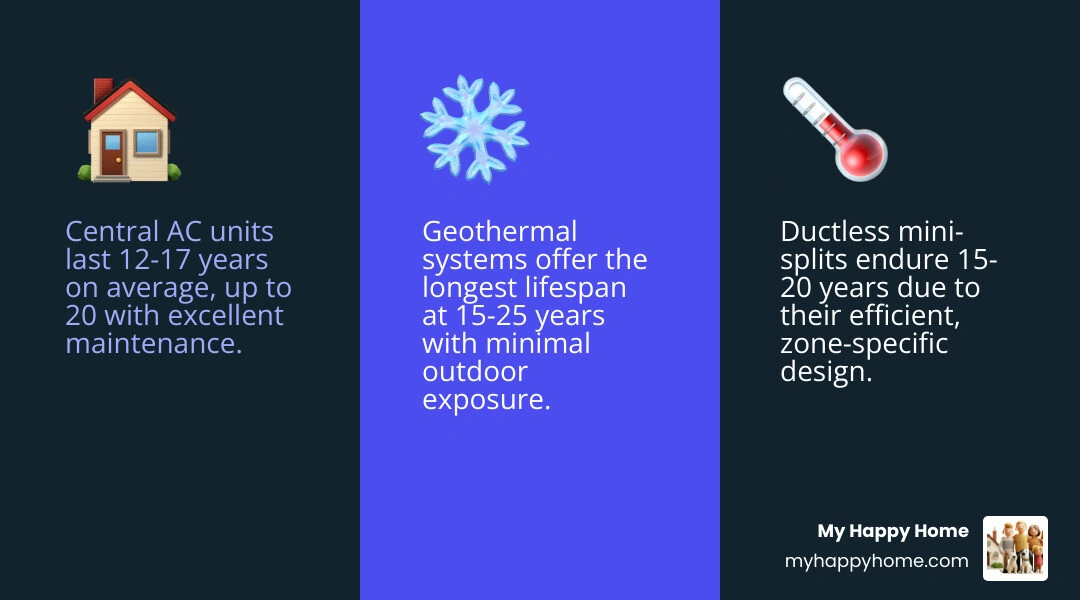
When we talk about how long these systems stick around, it’s important to realize that not all cooling technology is created equal. A window unit you bought at a big-box store isn't going to have the same staying power as a professionally installed central air system or a geothermal loop.
Central Air Conditioning
For most of us in O'Fallon, MO, central air is the gold standard. Under normal residential conditions, these units typically last between 12 and 17 years. However, if you are diligent about your AC Maintenance & Tune-Up, it is entirely possible to see that system push past the 20-year mark. Modern units built today are often more durable than those from twenty years ago, provided they aren't forced to work under extreme duress.
Heat Pumps
Heat pumps are the workhorses of the HVAC world. Because they provide both heating in the winter and cooling in the summer, they accumulate operational hours much faster than a standard AC. Because they are running almost year-round, their average lifespan is slightly shorter, typically ranging from 10 to 16 years. Some newer models are being manufactured to exceed these traditional expectations, but the "double duty" nature of the tech remains a factor.
Ductless Mini-Splits
These systems are becoming incredibly popular for home additions or older homes without ductwork. Ductless mini-splits often have a longer lifespan of 15 to 20 years. Part of this is due to their high efficiency and the fact that they don't lose energy (or accumulate dust) through leaky ducts.
Window and Portable Units
Window air conditioners typically last 8 to 12 years, while portable units have the shortest life expectancy, often failing between 5 and 10 years. These are generally seen as "disposable" appliances because the cost of a major repair often exceeds the price of a brand-new unit.
Geothermal Systems
If you’re looking for the marathon runner of the group, it’s geothermal. While the indoor heat pump components last 15 to 25 years, the underground ground loops can last upwards of 50 years. It is a significant investment, but in terms of pure longevity, it’s hard to beat.
How Long Does an AC Unit Last with Regular Maintenance?
We often tell our members that an air conditioner is a lot like a car. If you never change the oil or check the tires, you shouldn't be surprised when it breaks down at 50,000 miles. A well-maintained central air conditioner will last between 15 and 20 years, whereas a neglected one might give up the ghost before it hits its tenth birthday.
System Efficiency and Component Wear
When a system is dirty, every component has to work harder. A dust-caked evaporator coil can’t absorb heat efficiently, forcing the compressor to run longer cycles. This extra friction and heat lead to premature mechanical failure. By keeping things clean, you ensure that components like the capacitor and fan motor stay within their intended operating parameters.
Professional Inspections
This is where the real magic happens. During a professional visit, technicians check things you can't see, like capacitor voltage and refrigerant levels. Catching a small refrigerant leak early prevents the compressor from overheating—a "heart attack" that usually ends the unit's life. If you're wondering How Often Should You Schedule an AC Tune-Up?, the answer is at least once a year, ideally in the spring before the O'Fallon humidity hits.
Filter Changes: The Simplest Longevity Hack
If you do nothing else, change your filters every one to three months. A clogged filter restricts airflow, which is the number one cause of system strain. It’s a simple DIY task that can add years to the life of your equipment.
How Long Does an AC Unit Last in Extreme Climates?
Geography plays a massive role in how many "miles" your AC puts on every year. A unit in a northern state that only runs for three months a year is going to last much longer than one in the Deep South.
Humidity Levels in O'Fallon, MO
In our neck of the woods, we deal with significant summer humidity. Humidity doesn't just make you feel sticky; it makes your AC work twice as hard. The system has to remove moisture from the air before it can effectively lower the temperature. High humidity levels (over 50%) can lead to moisture accumulation within the unit itself, which can cause internal rust or mold if the drainage system isn't perfectly clear.
Regional Wear Patterns
While we don't have to worry about coastal salt air corroding our coils (which can drop a unit's lifespan to just 10-12 years), we do have our own environmental hazards. Cottonwood seeds, heavy pollen, and even mulch debris can clog outdoor condenser fins. If these aren't cleared, the unit "suffocates," leading to higher internal temperatures and a shorter lifespan.
Critical Factors Influencing System Longevity
Beyond just maintenance and weather, there are "day one" factors that determine the fate of your AC before you even turn it on for the first time.
Installation Quality and System Sizing
This is the single most important factor in AC longevity, often outweighing the brand of the unit itself. If a system is oversized, it will "short-cycle," turning on and off rapidly. This puts immense strain on the compressor. If it’s undersized, it will run constantly, never reaching the set temperature and wearing out the motor.
A proper AC Installation & Replacement requires a "Manual J" load calculation. This ensures the unit is perfectly matched to your home's square footage, insulation levels, and window orientation. Additionally, if your ductwork is leaky or restricted, your brand-new unit will struggle from the start.
Build Quality and Components
Not all compressors are created equal. Scroll compressors, for example, are generally more durable and have fewer moving parts than older reciprocating models. Choosing a unit from a reputable manufacturer that uses high-quality aluminum fins and copper tubing can also make a difference in how well the unit resists the elements over two decades.
Modern Technology and Refrigerant Standards
The HVAC industry has seen massive changes recently, particularly regarding refrigerants and efficiency standards.
The R-22 Phase-Out
If your unit was built before 2010, there’s a good chance it uses R-22 (Freon). As of January 1, 2020, R-22 is no longer produced or imported in the U.S. If an older unit develops a leak today, the cost of finding recycled refrigerant is often so high that it makes the unit "financially dead."
SEER2 Ratings
In 2023, the industry moved to SEER2 testing standards. Modern units are significantly more efficient than those built 15 years ago. Upgrading from an old SEER 10 unit to a modern SEER2-compliant system can reduce your cooling energy consumption by 20% to 30%. Knowing How a Tune-Up Improves Efficiency and Lowers Bills is great, but sometimes the mechanical limits of an old system mean a replacement is the only way to see real savings.
Smart Thermostats
Can a gadget extend your AC’s life? Surprisingly, yes. Smart thermostats can reduce unnecessary runtime by 15-20%. By automating energy-saving adjustments and preventing the system from running when no one is home, you’re essentially saving "hours" on the life of your compressor.
When to Repair vs. Replace: The $5,000 Rule
Deciding whether to sink money into an old unit or buy a new one is the hardest choice a homeowner faces. To make it easier, experts often use the $5,000 Rule.
The Decision-Making Formula
Multiply the age of your unit by the cost of the repair. If the total is more than $5,000, you should probably replace the unit.
- Example A: A 12-year-old unit needs a $600 repair. (12 x 600 = 7,200). Since 7,200 is over 5,000, replacement is likely the smarter move.
- Example B: A 6-year-old unit needs a $400 repair. (6 x 400 = 2,400). In this case, go ahead with the AC Repair Service.
Warning Signs of System Failure
Age isn't the only indicator. Keep an eye (and ear) out for these red flags:
- Rising Utility Bills: If your bills are climbing but your habits haven't changed, the unit is losing efficiency.
- Unusual Noises: Grinding, squealing, or banging sounds often point to a failing motor or compressor.
- Frequent Breakdowns: If we’re visiting your home every other month, your unit is telling you it’s tired.
- Inconsistent Cooling: Some rooms are ice cold while others are warm.
- Humidity Issues: The air feels heavy or damp even when the AC is running.
Maximizing Performance Through Proactive Care
You don't have to be an HVAC expert to help your AC survive the Missouri summer. A few proactive steps can make a world of difference.
Recommended Maintenance Schedule
We recommend a simple "1-1-1" strategy:
- 1 Month: Check your air filter. If you have pets or allergies, replace it.
- 1 Season: Clear the area around your outdoor unit. Ensure there is at least a two-foot clearance from shrubs, weeds, or stored items.
- 1 Year: Schedule your professional AC Maintenance & Tune-Up.
Optimization Tips
- Shade Your Unit: If possible, keep your outdoor condenser in a shaded area. This prevents it from absorbing direct solar heat, allowing it to dissipate heat more easily.
- Improve Insulation: Sealing gaps around windows and doors means your AC doesn't have to run as long to keep the house cool.
- Use Ceiling Fans: Fans allow you to set the thermostat a few degrees higher while feeling just as cool, reducing the workload on the AC.
For those who want total peace of mind, an Air Conditioning Protection Plan ensures that maintenance is never forgotten and repairs don't result in surprise bills.
Frequently Asked Questions
Is it worth repairing a 15-year-old AC unit?
Generally, no. At 15 years, the unit is at the end of its reliable life. Even if you fix the current issue, another component is likely to fail soon. Plus, the efficiency gains from a new unit will usually pay for the replacement over time through lower energy bills.
Can an air conditioner last 30 years?
While it is technically possible with exceptional care and a mild climate, it is extremely rare. Even if a unit lasts 30 years, it will be incredibly inefficient compared to modern standards, likely costing you much more in electricity than a new unit would.
Does a smart thermostat help an AC last longer?
Yes! By reducing total runtime and preventing "short cycling" through smarter temperature management, a smart thermostat can add 2 to 3 years of useful life to your system.
Conclusion
At MyHappyHome™, we believe homeownership shouldn't be a series of expensive surprises. Understanding how long does an ac unit last is the first step in taking control of your home’s comfort. Whether your system is a brand-new high-efficiency model or a veteran unit nearing its 15th birthday, proactive care is the key to a stress-free summer.
By joining a membership plan, you get the peace of mind that comes with predictable maintenance and comprehensive protection. We handle the scheduling, the vetting of technicians, and the repair requests, so you can just focus on staying cool.
Ready to ensure your system is up for the challenge? Explore our AC Maintenance & Tune-Up services today and let us help you keep your home "Happy" all year long.