
Furnace Installation & Replacement in San Francisco, CA

Is Your Heating System Becoming a Financial Liability?
Are high installation rates, confusing efficiency ratings, and uncertain contractor quality making your decision about a furnace replacement harder than it needs to be? You are likely facing the chill of a San Francisco winter with a system that is either failing or costing a fortune to operate, and you need a solution, not a sales pitch. Contact MyHappyHome today to discuss financing options or to schedule an immediate assessment of your heating needs.
- Receive a firm, transparent quote with our free in-home consultation.
- Benefit from same-day or next-day installation service to restore heat immediately.
- Enjoy post-install peace of mind with inclusive labor and manufacturer warranties.
- Licensed, bonded, and insured with financing options available for qualified homeowners.
What to Expect From a Modern Heating Installation
When you commit to a furnace replacement, you are purchasing more than a metal box; you are investing in the next two decades of your home’s climate control. The immediate scope of work involves removing your obsolete equipment and engineering a system that addresses the specific heat-loss profile of your property. In San Francisco, where homes range from modern builds to century-old Victorians, this requires a technical approach to ensure the new unit communicates correctly with your existing ductwork and thermostat.
A comprehensive installation package covers every aspect of the transition. This begins with the safe disconnection of gas lines and electrical high-voltage wiring. Technicians remove the old furnace, often hauling it away for recycling, ensuring no debris is left in your mechanical room or garage. The new equipment is then positioned, leveled, and secured. This phase includes reconnecting the flue pipe for safe ventilation, sealing the plenum to prevent air leaks, and calibrating the gas valve to manufacturer specifications.
Modern equipment options provide varying levels of control and efficiency. Homeowners can select from single-stage furnaces, which operate at full capacity whenever on, or two-stage and modulating furnaces. Two-stage units offer a low and high setting, running on low for the majority of the time to maintain consistent warmth without sharp temperature spikes. Modulating furnaces offer the highest precision, adjusting their flame in tiny increments to match the exact heating demand of the home. Your installation includes the selection of the correct AFUE (Annual Fuel Utilization Efficiency) rating, balancing upfront costs against long-term utility savings.
The Installation and Replacement Process
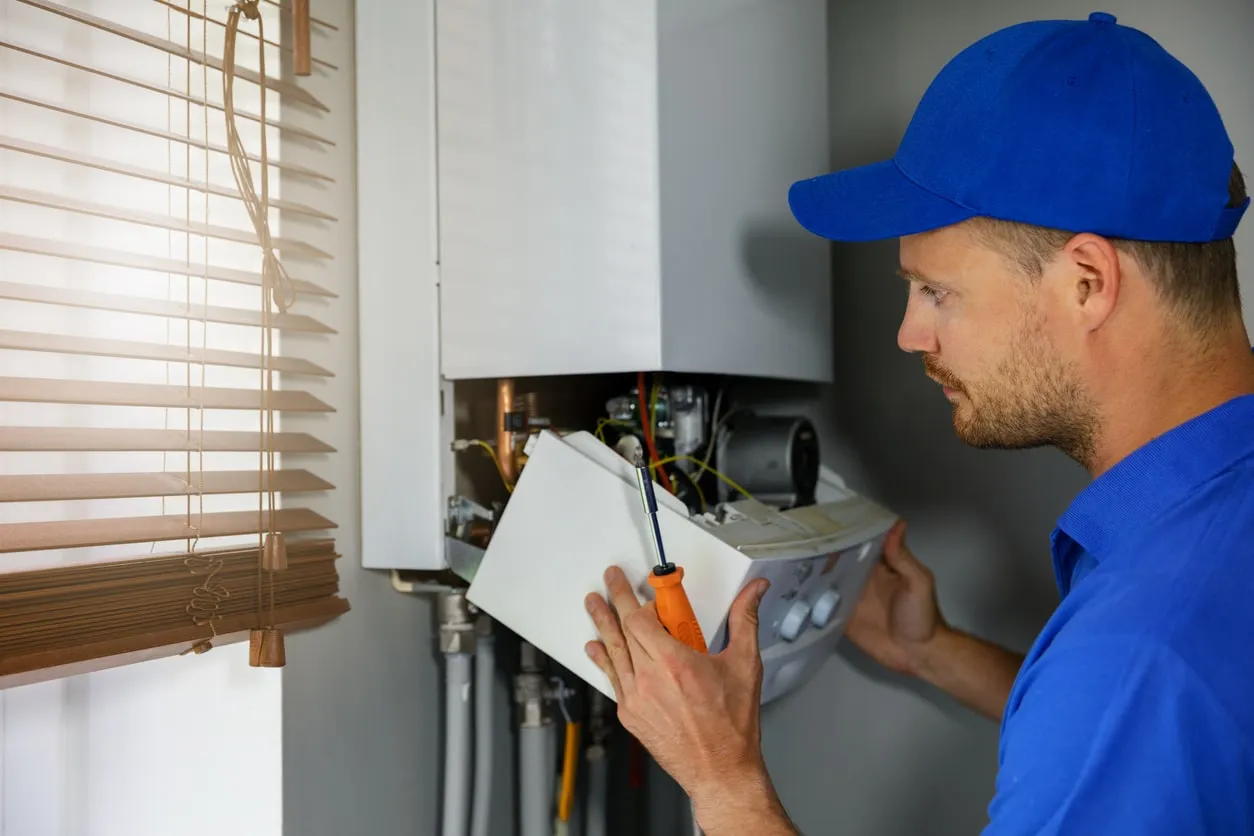
A professional installation follows a rigorous, standardized workflow designed to eliminate errors and ensure safety. This process moves from calculation to execution, ensuring that the installed unit performs exactly as rated.
- Load Calculation and Sizing: The process begins with a Manual J load calculation. Technicians measure the square footage, window surface area, insulation levels, and orientation of the home. This determines the exact British Thermal Unit (BTU) requirement. Installing a furnace that is too large causes "short-cycling," leading to premature wear, while a unit that is too small will run continuously without ever reaching the set temperature.
- Site Preparation and Protection: Before moving equipment, the workspace is prepared. Drop cloths protect flooring, and the path to the furnace location is cleared. If the furnace is located in an attic or crawlspace, technicians ensure there is safe access and lighting. Gas and electrical supplies are shut off at the source to ensure a safe working environment.
- Ductwork and Plenum Modification: New furnaces often have different physical dimensions than models from 15 or 20 years ago. The supply and return plenums (the metal boxes that connect the furnace to the ductwork) are modified or rebuilt to create an airtight seal. This step is critical for maintaining static pressure, which dictates how well air moves through the vents.
- Venting and Drainage Configuration: For high-efficiency condensing furnaces (90% AFUE and above), specific venting changes are required. These units use PVC pipes instead of metal flues and produce condensate water that must be drained. Technicians install the intake and exhaust piping and route the condensate drain line to a floor drain or condensate pump.
- System Commissioning and Testing: Once physically installed, MyHappyHome technicians perform a startup sequence. This involves testing the ignition system, measuring the temperature rise (the difference between air entering and leaving the furnace), and checking for gas leaks. The blower motor speed is adjusted to ensure quiet operation and optimal airflow.
- Final Walkthrough and Education: The installation concludes with a handover. You receive instruction on how to operate the new thermostat, how to change the filter, and what maintenance schedule is required to keep the warranty valid.
Deciding Between Repair and Replacement
Determining whether to sink more money into an aging unit or invest in a replacement is a purely mathematical and risk-based decision. While repairs can solve immediate breakdowns, they often serve as temporary patches on a system nearing the end of its useful life.
- The Age Factor: The average lifespan of a gas furnace is between 15 and 20 years. If your system is approaching or has surpassed the 15-year mark, major components like the heat exchanger or blower motor are statistically likely to fail soon. Replacement eliminates the risk of cascading failures where one fixed part leads to pressure on another aging part.
- The 50% Rule: A common industry standard for decision-making is the 50% rule. If the cost of the repair approaches 50% of the cost of a new system, replacement is the smarter financial move. This is particularly true if the warranty on the existing unit has expired, leaving you liable for both parts and labor.
- Rising Energy Bills: Furnaces lose efficiency as they age due to sediment buildup, motor wear, and leaks in the heat exchanger. If your energy bills have steadily increased despite normal usage, the system is working harder to produce the same amount of heat. Upgrading from an old 70% AFUE unit to a modern 96% AFUE model can result in significant monthly savings.
- Safety Concerns: Older furnaces, particularly those with neglected maintenance, pose safety risks. Cracks in the heat exchanger can allow carbon monoxide to leak into the living space. If a technician identifies a compromised heat exchanger, immediate replacement is often the only safe option, as repairing this component is cost-prohibitive and risky.
- Comfort and Noise Issues: Uneven heating, cold spots in certain rooms, or excessive noise during operation indicate that the furnace is no longer capable of distributing air effectively. Modern variable-speed blowers solve these issues by running longer at lower speeds, mixing the air more thoroughly, and operating almost silently.
Regional Considerations for Heating Systems
Operating a heating system in the Bay Area requires attention to specific environmental and regulatory factors. The local climate and building codes dictate certain installation practices that differ from those in other regions.
- Handling Humidity and Rust: The Mediterranean climate brings wet winters and high humidity levels due to proximity to the Pacific Ocean. This moisture content can accelerate rust and corrosion on furnace components, particularly if the unit is located in an unconditioned space like a garage or basement. Installation often involves elevating the unit off the floor to prevent water damage and using corrosion-resistant materials for venting.
- Permitting and Title 24 Compliance: All furnace replacements require a permit from the local building department. This ensures the installation meets safety codes regarding gas piping, electrical grounding, and ventilation. Furthermore, California’s Title 24 energy standards mandate specific efficiency ratings and duct sealing requirements. Technicians must verify that the new system meets these rigorous state standards to pass final inspection.
- Ventilation in Older Architecture: Many properties in the area are older constructions with unique architectural constraints, such as narrow basements, closet installations, or knob-and-tube wiring remnants. Retrofitting a modern furnace into these spaces requires specialized sheet metal fabrication and careful routing of new venting pipes to avoid damaging the integrity of the historic structure.
- Seismic Safety: Located in a seismically active zone, local codes require heating equipment to be properly braced and strapped. This prevents the furnace from tipping over or shifting during an earthquake, which could rupture gas lines and cause a fire. Professional installation always includes the application of seismic strapping and flexible gas connectors designed to withstand movement.
Why Professional Execution is Non-Negotiable
The reliability of a furnace is determined 20% by the brand of the equipment and 80% by the quality of the installation. Even the most expensive, high-efficiency model will fail prematurely if the ductwork is undersized, the venting is improper, or the gas pressure is miscalibrated.
- Warranty Protection: Manufacturers maintain strict warranty terms that require proof of professional installation by a licensed contractor. DIY or handyman installations typically void these warranties immediately. Professional installers register the equipment on your behalf, ensuring that you have full coverage for parts and potential labor costs for up to 10 years.
- Safety and Liability: Furnace installation involves handling natural gas, carbon monoxide exhaust, and high-voltage electricity. A single error in the gas line connection or the flue venting can have catastrophic consequences. Licensed professionals carry liability insurance and follow strict safety protocols to protect your home and family.
- System Longevity and Efficiency: Proper airflow is the key to longevity. Professionals use static pressure testing to ensure the blower motor is not overworking. This attention to detail prevents the system from overheating and ensures that the unit achieves the efficiency rating stated on the Energy Guide label.
- Access to Rebates: Many utility companies and local government programs offer rebates for upgrading to high-efficiency heating systems. These rebates almost always require an invoice from a licensed contractor, including specific tax ID numbers and license information. Professional installers assist in identifying and documenting these opportunities to lower the net cost of the investment.
Securing Your Home Comfort
A furnace replacement is a significant decision that impacts your home’s safety, energy consumption, and comfort level for years to come. By prioritizing a proper installation process over the lowest initial bid, you ensure that your heating system operates quietly, efficiently, and reliably through the wettest winters. MyHappyHome provides the technical expertise and transparent pricing required to make this transition seamless.
Secure your installation date and ensure your home remains warm this season. Contact us now to schedule your comprehensive evaluation.

Get happy home tips delivered to your inbox.
Join the growing family of homeowners who have said goodbye to stress and hello to simple, worry-free living. With MyHappyHome, you're not just getting a service plan, you're getting a partner dedicated to your happiness.