
AC Installation & Replacement in San Francisco, CA

Struggling With AC Installation Costs or Efficiency?
Dealing with unexpected breakdowns or inefficiencies in your current AC system in San Francisco can be frustrating, especially when cost transparency is lacking. You are likely searching for a reliable solution that balances immediate comfort with long-term financial sense; contact us today to schedule an estimate or discuss our flexible financing options.
The decision to install a new cooling system involves more than just selecting a brand; it requires navigating efficiency ratings, local permit requirements, and installation logistics. MyHappyHome specializes in streamlining this process for local homeowners.
- Transparent pricing ranging from competitive entry-level options to high-end systems, based entirely on your specific system choices and installation needs.
- Same-day service options to get your AC up and running without delay, ensuring your home remains comfortable.
- Energy-efficient systems that save costs and align with San Francisco’s environmental standards.
All installations come with full compliance to local codes and available financing options.
What to Expect From a Modern Cooling System Installation
When you invest in a new air conditioning system, you are purchasing more than hardware; you are securing climate control precision and energy stability for your home. Modern installations in San Francisco focus heavily on SEER2 (Seasonal Energy Efficiency Ratio) ratings. A higher SEER2 rating indicates a more efficient unit, which translates directly to lower monthly electricity bills. While older units may operate at 10 or 12 SEER, modern standards require higher efficiency, often starting at 14 or 15 SEER2 and going much higher for premium systems.
The scope of a standard installation includes the removal and disposal of existing equipment, ensuring that hazardous materials like old refrigerant are handled according to environmental regulations. The project also covers the modification of the plenum (the box connecting your furnace to your ductwork) to fit the new coil, electrical upgrades to support the new unit, and the installation of a new thermostat if required.
Homeowners can expect a detailed site evaluation before any work begins. This ensures that the chosen unit is correctly sized for the square footage and thermal characteristics of the property. An oversized unit will cycle on and off too frequently, leading to wear and tear, while an undersized unit will run continuously without adequately cooling the space.
- System Sizing: Accurate load calculations are performed to determine exactly how much cooling power (measured in BTUs) is required.
- Ductwork Inspection: Existing ducts are checked for leaks or insulation failures that could undermine the efficiency of the new unit.
- Electrical Safety: Circuit breakers and wiring are assessed to ensure they can handle the amperage of the new equipment safely.
- Debris Removal: The workspace is cleared of all old equipment and packaging materials upon completion.
The Installation and Replacement Process
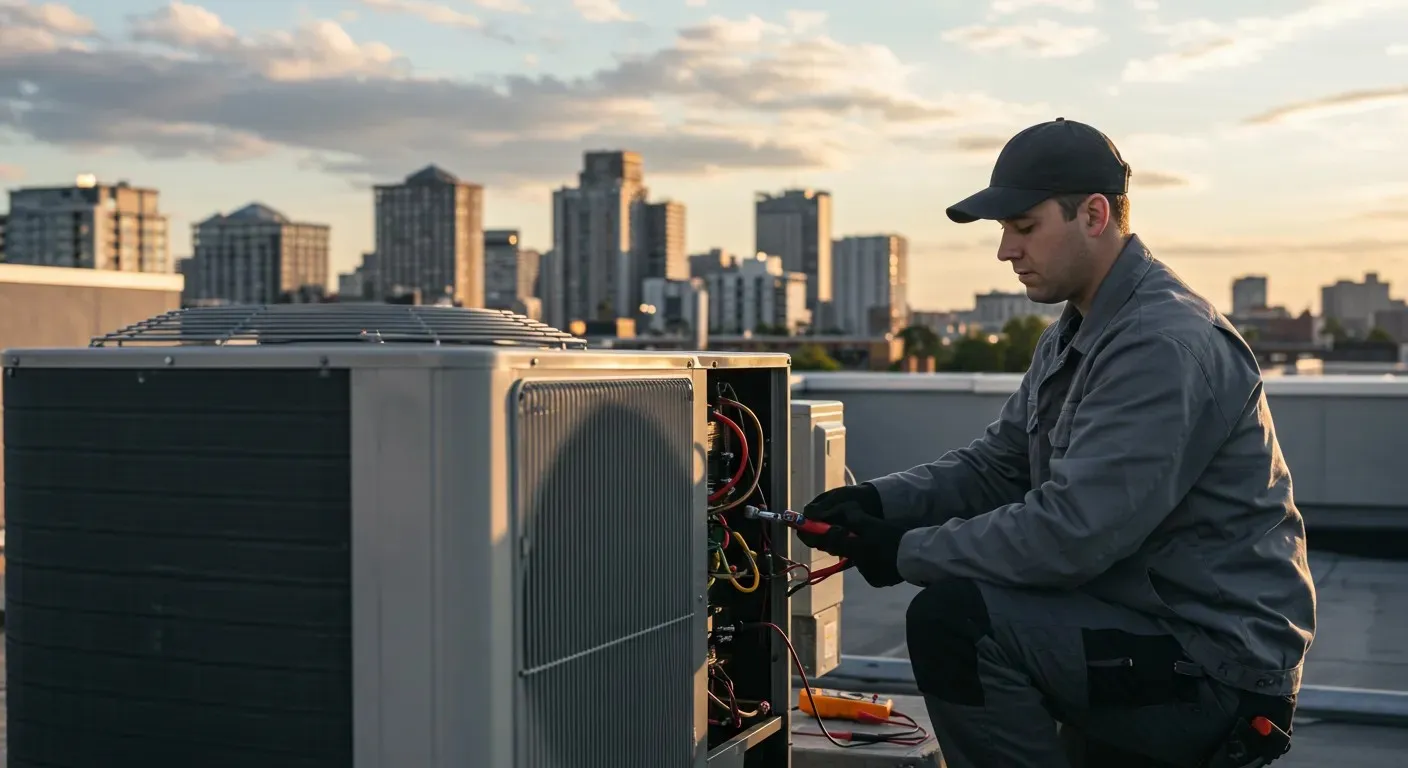
A professional installation follows a rigorous, step-by-step protocol designed to maximize system longevity and performance. This process is technical and requires licensed professionals to handle refrigerants, high-voltage electricity, and gas lines where applicable.
- Site Preparation and Protection: First, the installation team prepares the work area. This involves laying down drop cloths to protect flooring and ensuring clear access to the service area, whether it is located in a basement, garage, or attic. Safety disconnects are turned off to ensure no electrical current is flowing to the equipment during removal.
- Removal of Existing Equipment: Next, the technician recovers the refrigerant from the old system. This is a critical legal and environmental step, as releasing refrigerant into the atmosphere is prohibited. Once the lines are clear, the old condenser (outdoor unit) and evaporator coil (indoor unit) are disconnected and removed from the property.
- Positioning and Connection of New Units: The new indoor coil is installed on top of the furnace or air handler. Simultaneously, the new outdoor condenser is positioned on a composite pad or mounting brackets to ensure stability and vibration isolation. The line set the copper tubing that carries refrigerant between the indoor and outdoor units is either replaced or flushed and reconnected.
- Brazing and Sealed System Check: Technicians then braze the copper connections to create a sealed system. A vacuum pump is used to remove all moisture and air from the refrigerant lines. This step is vital because moisture inside the lines can freeze or cause acid formation, destroying the compressor.
- Charging and Commissioning: Finally, the system is charged with the precise amount of refrigerant specified by the manufacturer. MyHappyHome technicians then perform a startup sequence, checking static pressure, temperature differentials (the drop in temperature across the coil), and airflow to verify the system is operating at peak efficiency.
Deciding Between Repair and Full Replacement
Determining whether to repair an aging unit or invest in a replacement is a common dilemma. While repairs may seem cheaper upfront, they can be financially draining if the system is nearing the end of its lifespan. Industry professionals often utilize the "$5,000 Rule" to aid in this decision.
To use this rule, multiply the age of the equipment by the estimated cost of the repair. If the total exceeds $5,000, replacement is generally the more prudent financial choice schedule service today. For example, if a 12-year-old unit requires a $600 repair (12 x 600 = 7,200), the money is better spent on a new system. If a 5-year-old unit needs the same repair (5 x 600 = 3,000), repair is likely the better option.
Beyond the math, there are technical factors that dictate replacement:
- Refrigerant Type: If your current system uses R-22 (Freon), it is obsolete. R-22 production has ceased, making refills prohibitively expensive. Upgrading to a system that uses R-410A or newer refrigerants is necessary for future serviceability.
- Compressor Failure: The compressor is the heart of the AC system. If it fails, the cost of replacement (including parts and labor) is often comparable to installing a brand-new outdoor unit, which would come with a fresh warranty.
- Heat Exchanger Issues: For combined heating and cooling systems, a cracked heat exchanger is a safety hazard (carbon monoxide risk) that mandates immediate equipment replacement.
- Recurring Leakage: If a system requires refrigerant refills every season, it has a leak. Continually topping off a leaking system is expensive and environmentally harmful. Replacement eliminates the leak and restores efficiency.
Navigating San Francisco Climate and Regulations
The climate in San Francisco presents unique challenges for air conditioning. While the region is known for mild temperatures and summer fog, heat waves in September and October can be intense. Furthermore, humidity levels can fluctuate significantly. A properly installed AC system does more than cool the air; it dehumidifies it. Systems must be calibrated to handle the wet winters and the specific moisture load of the coastal environment to prevent mold growth in ductwork.
Local regulations also play a massive role in the installation process. California has some of the strictest energy codes in the nation, specifically Title 24.
- Title 24 Compliance: New installations must meet specific energy efficiency standards. This often requires third-party verification of duct sealing and airflow. The goal is to ensure that the energy consumed by the AC unit is not wasted through leaky ducts or poor insulation.
- Permitting Requirements: San Francisco requires building permits for mechanical installations. This ensures that the electrical work meets safety codes and that the unit is properly secured against seismic activity. Skipping the permit process can result in fines and complications when selling the home.
- Noise Ordinances: Due to the density of housing in many neighborhoods, noise pollution is a concern. The placement of the outdoor condenser must comply with local noise ordinances to avoid disturbing neighbors. Modern units are significantly quieter than older models, but placement still matters.
- Electrical Panel Upgrades: Many older Victorian or Edwardian homes in the city may still operate on 100-amp electrical panels. Modern central air conditioning often requires dedicated circuits. An assessment will determine if a panel upgrade is necessary to support the additional load without tripping breakers.
Why Homeowners Choose Professional Installation
Selecting a service provider is the single most important variable in the lifespan of your air conditioner. The best equipment installed incorrectly will fail prematurely and run inefficiently. Professional installation ensures that the theoretical efficiency rating on the box is the actual efficiency you experience in your home.
Warranties are contingent on professional installation. Manufacturers of major AC brands generally require proof that the unit was installed by a licensed HVAC contractor to honor parts warranties. If a compressor fails in year three, a valid warranty can save homeowners thousands of dollars. Additionally, reputable installers provide labor warranties, covering the cost of service calls if adjustments are needed shortly after the installation.
Safety is another non-negotiable factor. AC installation involves high-voltage wiring and, in the case of gas furnaces, combustible fuels. Certified technicians are trained to identify potential hazards, such as undersized wiring or improper venting, that a general handyman might miss. Certifications like NATE (North American Technician Excellence) indicate that a technician has demonstrated real-world working knowledge of HVAC systems.
Finally, professional installers understand the nuances of airflow balancing. It is not enough to blow cold air; that air must be distributed evenly throughout the house. Technicians adjust dampers and registers to eliminate hot spots and ensure that upstairs rooms stay as cool as the ground floor.
Your home comfort and energy bills depend on the quality of your installation. Do not leave your investment to chance or cut corners with unpermitted work. Secure a system that provides reliable cooling for years to come.
Upgrade Your Comfort with MyHappyHome
A reliable cooling system starts with expert installation and trusted guidance. MyHappyHome delivers transparent pricing, code-compliant workmanship, and energy-efficient solutions tailored to San Francisco homes. From system selection to final inspection, our team ensures your investment delivers lasting comfort and savings. Schedule your AC installation consultation today through myhappyhome.com and experience dependable comfort backed by the MyHappyHome promise at myhappyhome.com/#promise.
Ready to upgrade your comfort and lower your energy costs? Contact MyHappyHome today to schedule your consultation.

Get happy home tips delivered to your inbox.
Join the growing family of homeowners who have said goodbye to stress and hello to simple, worry-free living. With MyHappyHome, you're not just getting a service plan, you're getting a partner dedicated to your happiness.