

Water Heater Repair & Service in Seattle, WA

Restore Hot Water Reliability to Your Home
Unexpected icy showers or pooling water around your tank require immediate professional attention to prevent property damage and restore comfort. Contact MyHappyHome immediately to schedule a diagnostic visit or discuss financing options for your home.
If you are facing issues with your water heater, such as leaks or a complete lack of hot water, you know how disruptive it can be to your daily routine in Seattle. Our expert technicians are here to provide quick, reliable repairs and comprehensive service solutions to get your system running correctly.
- Emergency services available 24/7 to handle urgent repairs.
- Comprehensive inspections and maintenance to enhance longevity and efficiency.
- Flexible financing options, including energy-saving rebates.
Fully licensed and insured for your peace of mind, with all work backed by a solid warranty.
Immediate Solutions for Water Heater Repairs
A malfunctioning water heater creates more than just discomfort; it can halt household chores and, in cases of leaking, threaten the structural integrity of your flooring and drywall. When a system fails, the priority is accurate diagnostics followed by rapid intervention. Residents in the Pacific Northwest rely heavily on consistent hot water, especially during the colder months from December through February when groundwater temperatures drop significantly.
Technicians arrive equipped to address the most critical symptoms immediately. If the unit produces no hot water, the issue often stems from a failed heating element in electric models or a thermocouple malfunction in gas units. Inconsistent temperatures usually indicate a compromised dip tube or sediment buildup that separates the heat source from the water. Leaks, the most urgent of all symptoms, require determining whether the issue is a loose connection, a faulty temperature and pressure relief valve (T&P valve), or a corroded tank liner.
MyHappyHome focuses on identifying the root cause rather than simply patching a symptom. For example, if a relief valve is leaking, it may indicate dangerously high pressure in your home's plumbing system, requiring an expansion tank adjustment rather than just a valve swap. This depth of service ensures that the repair holds and the unit operates safely.
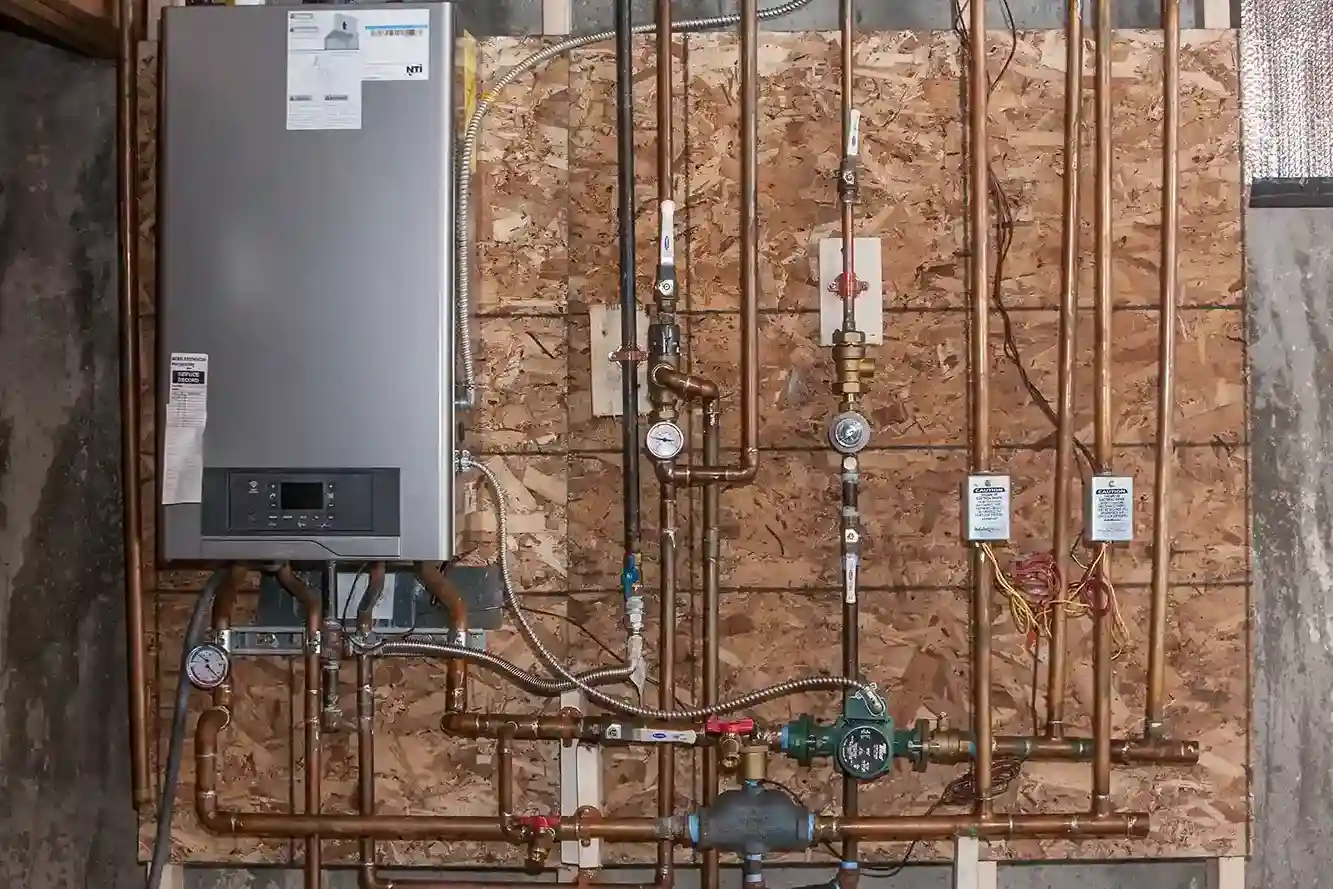
What You Get Today: Scope and Timeline
When you book a service appointment, the goal is to resolve the issue in a single visit whenever possible. The service begins with a comprehensive evaluation of the entire water heating system, not just the component that seems broken. This includes checking gas lines, venting systems, electrical connections, and water pressure levels.
Professional service appointments typically follow a structured timeline:
- Arrival and Assessment: Technicians arrive within the scheduled window, wearing protective gear to keep your home clean.
- Diagnostic Testing: Using multimeters, manometers, and leak detectors, the exact failure point is pinpointed.
- Upfront Explanation: Before any work begins, you receive a clear explanation of the problem, the proposed solution, and the total cost.
- Immediate Repair: With fully stocked trucks containing common parts like thermostats, elements, gas control valves, and anodes, most repairs are completed on the spot.
- Safety Verification: Post-repair, the system is tested for carbon monoxide leaks (for gas units) and proper electrical grounding.
You receive a fully functional system along with a report on the unit's overall health. This transparency allows you to budget for future maintenance or eventual replacement without surprise breakdowns.
The Repair and Maintenance Process
Maintaining a water heater extends its lifespan and improves energy efficiency, which is vital for managing utility costs. The repair and maintenance process is methodical, ensuring no safety checks are overlooked.
- Draining and Flushing: Over time, minerals from the water supply settle at the bottom of the tank. This sediment acts as an insulator, forcing the burner or element to work harder. The technician attaches a hose to the drain valve to remove this buildup, restoring heat transfer efficiency and quieting the "popping" or "rumbling" noises often heard in older tanks.
- Anode Rod Inspection: The anode rod is a sacrificial metal core designed to attract corrosion so the tank liner does not. Technicians check the level of depletion on this rod. Replacing a worn anode rod is a low-cost maintenance step that can add years to the tank's life.
- T&P Valve Testing: The Temperature and Pressure Relief Valve is a critical safety feature that prevents the tank from exploding due to excess pressure. The technician manually activates this valve to ensure it opens freely and snaps back to a watertight seal.
- Burner Assembly Cleaning: For gas units, dust and lint can clog the air intake screen or the burner itself, leading to poor combustion. The assembly is cleaned to ensure a steady, blue flame, which indicates efficient burning.
- Electrical Connection Tightening: Loose wires cause resistance and heat, which can melt insulation and trip breakers. All electrical connections are inspected and tightened to manufacturer specifications.
When Replacement Beats Repair
Deciding between repairing an existing unit and investing in a new one depends on safety, cost-efficiency, and the age of the equipment. While repairs are often the fastest solution, they are not always the most economical choice in the long run.
- The 50% Rule: If the cost of the repair approaches or exceeds 50% of the cost of a new unit, replacement is generally the smarter financial move.
- Age of the Unit: Standard tank water heaters typically last between 8 and 12 years. If a unit is over 10 years old and requires a significant repair, investing that money into a modern, more efficient model is preferable to fixing a dying appliance.
- Recurring Issues: If the unit has required multiple repairs in the last year, it signals that internal components are failing systematically.
- Efficiency Ratings: Older units often lack the insulation and burner technology of current models. Upgrading to an Energy Star-rated model or a tankless system can significantly reduce monthly energy bills, offsetting the installation cost over time.
- Rusty Water: If hot water comes out with a reddish tint, it usually indicates the tank's inner lining has rusted through. This is non-repairable and requires immediate replacement to prevent a catastrophic leak.
Installation and Replacement Workflows
If a replacement is necessary, the installation process is handled with strict adherence to code and safety standards. A proper installation ensures the warranty remains valid and the unit operates safely for years.
- Sizing and Selection: The process starts with calculating the peak hour demand of the household. This ensures the new unit—whether a 50-gallon tank or a high-output tankless system—can supply enough hot water for simultaneous showers and appliance usage.
- Safe Removal: The old unit is drained, disconnected, and hauled away. Care is taken to prevent water damage to floors during removal.
- Code Compliance Upgrades: New installations often require updates to meet current codes. This includes installing thermal expansion tanks, upgrading gas shut-off valves, and ensuring venting meets proper clearances.
- Seismic Strapping: In this region, securing the water heater with approved seismic straps is a mandatory safety requirement to prevent tipping during an earthquake.
- Final Commissioning: The new unit is filled, fired up, and tested. The technician adjusts the temperature to a safe 120 degrees Fahrenheit to prevent scalding while minimizing bacterial growth.
Local Notes: Permits, Utilities, and Seasonality
Operating a water heater in Seattle presents specific challenges and requirements that homeowners must navigate. The local climate and regulatory environment influence how systems should be maintained and installed.
- Permitting Requirements: The City of Seattle and surrounding King County areas strictly regulate water heater installations. A permit is almost always required for a replacement to ensure the work meets plumbing and mechanical codes. This includes verification of earthquake strapping and proper venting. Professional providers handle the pulling of permits and scheduling of final inspections as part of the service.
- Utility Rebates: Washington State and local entities like Seattle Public Utilities frequently offer rebates for upgrading to high-efficiency heat pump water heaters or tankless gas units. These incentives can substantially lower the upfront cost of modernization.
- Winter Demand: The specific climate in the Pacific Northwest involves cold, damp winters. During December, January, and February, the incoming ground water is colder, requiring the water heater to expend more energy to reach the desired temperature. This increased workload is why most failures occur during winter. Pre-winter maintenance is highly recommended to ensure the system can handle the seasonal load.
- Water Quality: While the local water is generally soft, mineral deposits can still accumulate over time. Regular flushing is necessary to prevent efficiency loss, particularly for electric models where sediment can bury the lower heating element, causing it to burn out premature.
Why Professional Service Matters
Water heaters involve dangerous elements: natural gas, carbon monoxide, high-voltage electricity, and scalding water under pressure. Attempting DIY repairs or hiring unlicensed handymen puts the household at risk of fire, flood, or gas leaks. Professional technicians understand the intricacies of venting calculations and pressure dynamics.
Furthermore, manufacturers often void warranties if the unit is not serviced by a licensed professional. Proof of professional maintenance is required to claim parts or labor coverage if a defect arises. By utilizing a dedicated service provider, you ensure a paper trail of proper care that protects your investment.
Expert technicians also bring a level of diagnostic accuracy that saves money. Rather than guessing and replacing parts at random, professionals isolate the issue immediately. This reduces downtime and eliminates the waste of buying unnecessary components.
Secure Your Comfort and Safety Today
A reliable supply of hot water is essential for hygiene and comfort. Whether you are dealing with a cold shower, a noisy tank, or a leak in the basement, prompt action minimizes damage and restores normalcy to your home. MyHappyHome provides the expertise required to diagnose issues accurately and execute repairs that last. Don't wait for a small leak to become a flooded basement.
Call now to schedule your water heater service or replacement consultation.

Get happy home tips delivered to your inbox.
Join the growing family of homeowners who have said goodbye to stress and hello to simple, worry-free living. With MyHappyHome, you're not just getting a service plan, you're getting a partner dedicated to your happiness.